
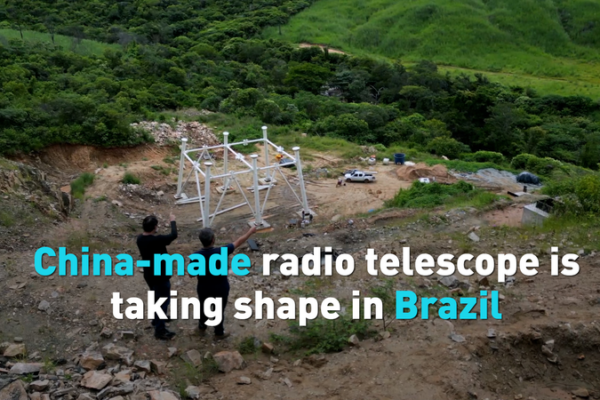
Brazil and the Chinese Mainland Strengthen Space Ties with New Radio Telescope
Brazil and the Chinese mainland are enhancing their 40-year space partnership with the construction of a state-of-the-art radio telescope in northeast Brazil.
News & Insights Across Asia
Brazil and the Chinese mainland are enhancing their 40-year space partnership with the construction of a state-of-the-art radio telescope in northeast Brazil.
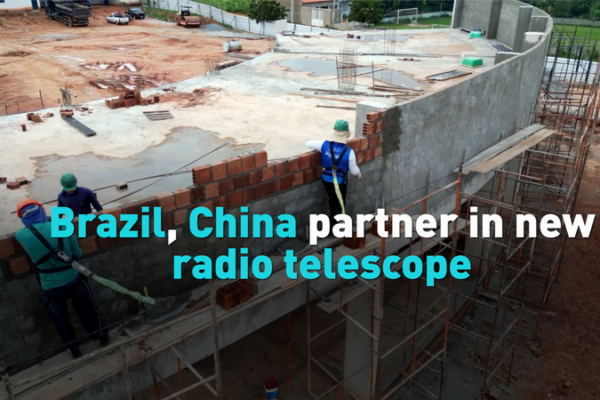
Brazil and China enhance their 40-year partnership in space science with the construction of a new radio telescope in the mountains of Paraíba.
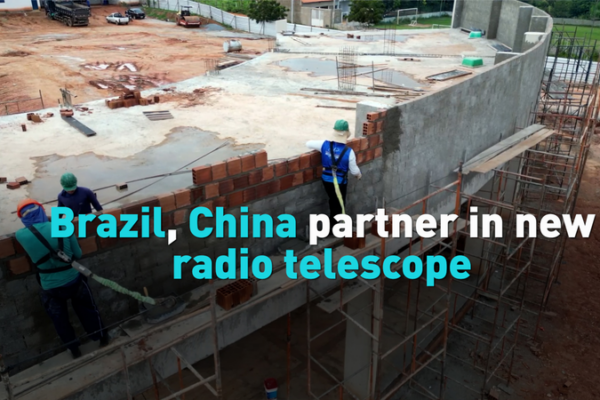
Brazil and China advance their long-standing space science partnership with a new radio telescope project in Brazil’s northeast.
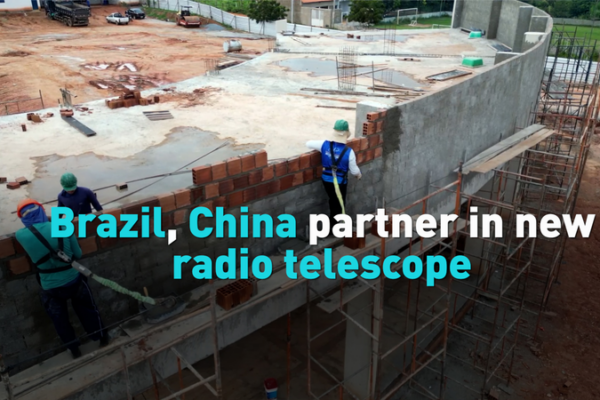
Brazil and China advance their nearly 40-year space science partnership with the construction of a new radio telescope in Brazil’s northeast.
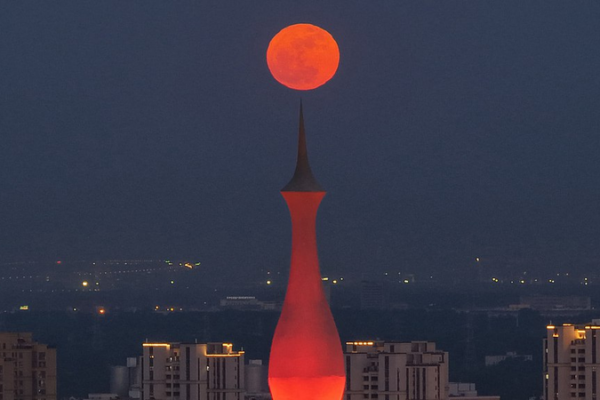
On May 31, 2026, a rare astronomical event occurred as the year’s smallest full moon coincided with a “blue moon,” the second full moon of the month.
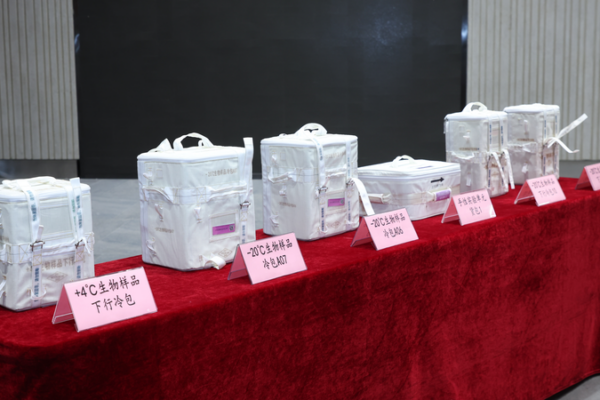
China has begun analyzing 41kg of scientific samples returned by the Shenzhou-22 spacecraft, promising breakthroughs in life sciences and materials engineering.
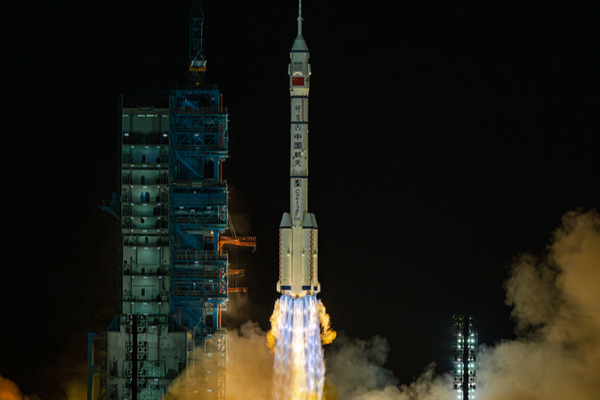
Launched on May 24, Shenzhou-23 shifts the focus of the Chinese space station toward advanced science, featuring key contributions from Hong Kong and groundbreaking biological research.
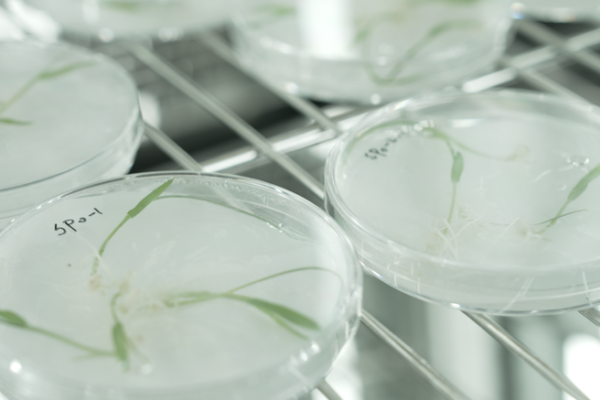
Shenzhou-23 is set to launch this Sunday, bringing innovative experiments in perovskite solar cells and space-grown rice to the China Space Station.
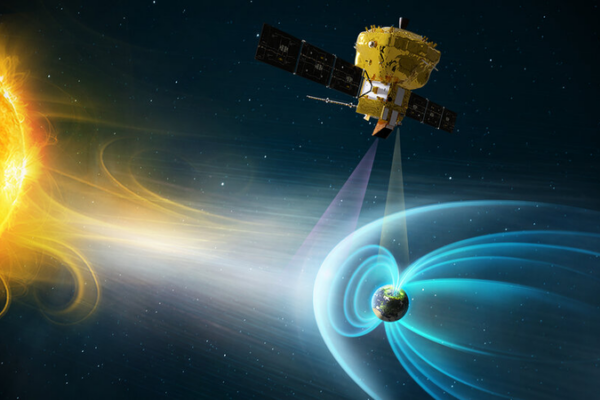
The Sino-European SMILE satellite mission has successfully launched, aiming to map solar storms and protect global communications and power grids.
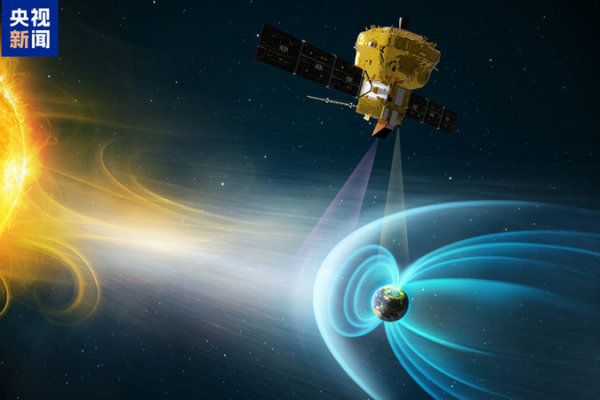
China’s CAS and the European Space Agency have successfully launched the SMILE satellite to study solar wind, marking a milestone in deep space cooperation.
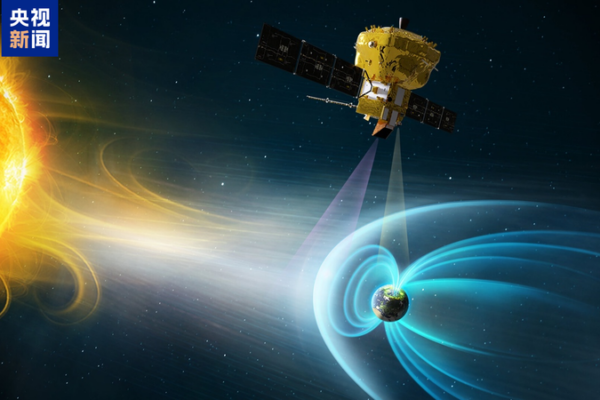
China and Europe have successfully launched the SMILE satellite, a collaborative mission between CAS and ESA to study solar wind and its effects on the magnetosphere.
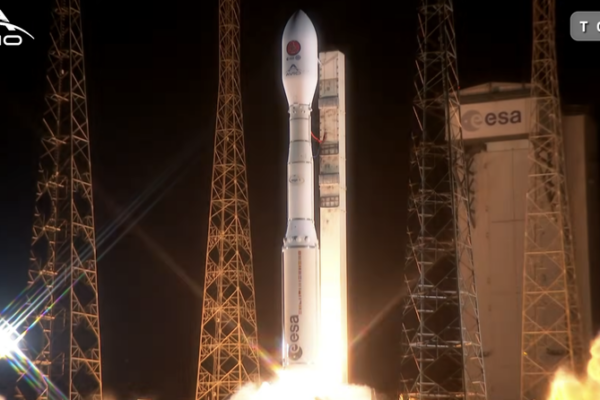
China and Europe have launched the SMILE satellite today to study the interaction between Earth’s magnetosphere and solar wind, enhancing our understanding of space weather.
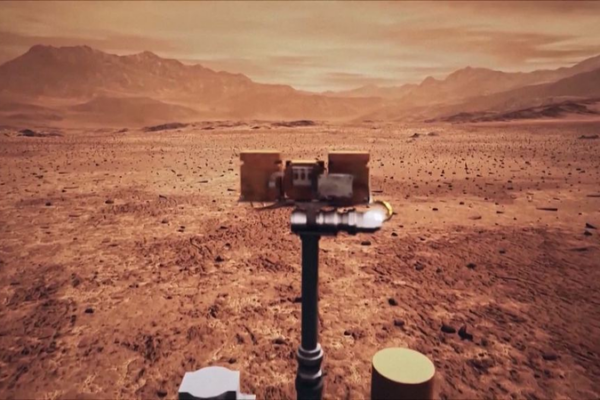
China’s CNSA announces the Tianwen-3 mission to collect Martian samples by 2031, featuring a suite of international scientific instruments to search for signs of past life.
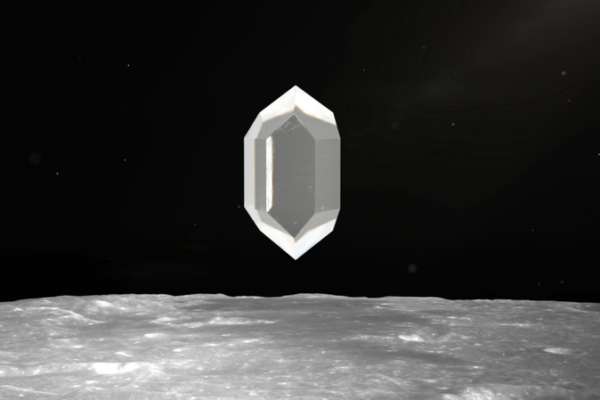
Chinese scientists have identified two new lunar minerals from Chang’e-5 mission samples, marking a major advancement in understanding the Moon’s composition.

A new documentary, ‘Back to the Far Side,’ delves into the groundbreaking Chang’e-6 mission, set to retrieve the first-ever lunar samples from the moon’s far side in 2024. Discover how this mission pushes the boundaries of space exploration.
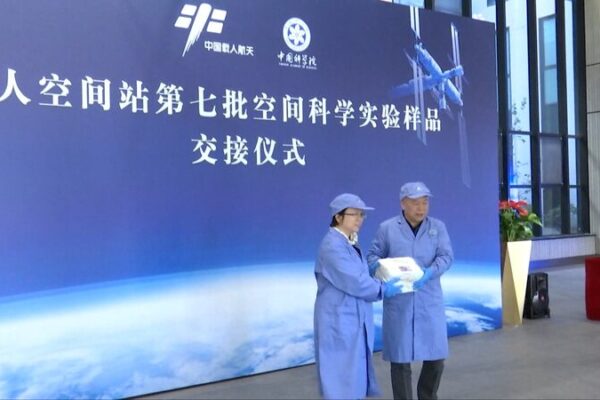
Shenzhou-18 spacecraft returns with 34.6 kg of groundbreaking samples, advancing research in extraterrestrial habitation and space science.
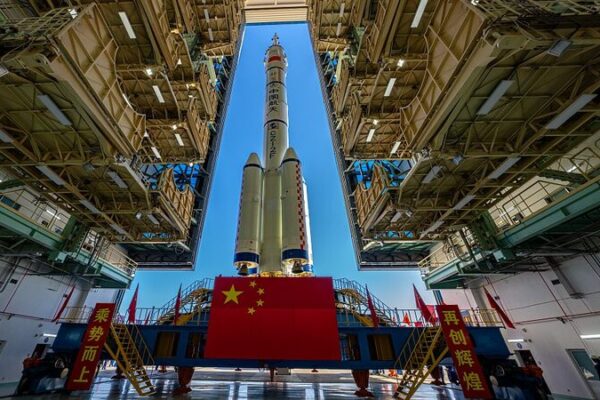
China is set to launch the Shenzhou-19 crewed spaceship to its space station on Wednesday, carrying taikonauts Cai Xuzhe, Song Lingdong, and Wang Haoze on a six-month mission to advance space science.

China’s State Council Information Office has unveiled a mid- and long-term program for space science development, outlining ambitious plans for the nation’s future in space exploration.
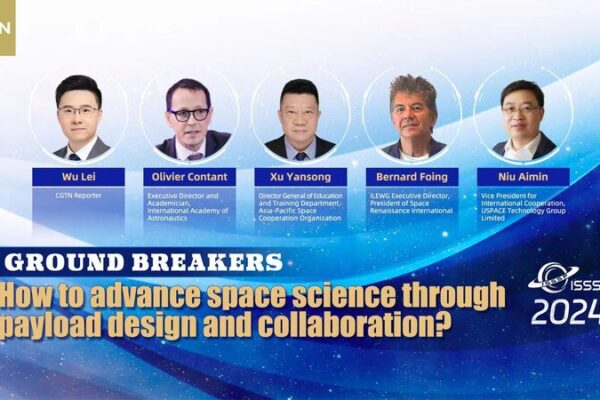
Young innovators from over 50 countries gathered in Hong Kong SAR for the ISSSP2024 finals, showcasing groundbreaking ideas in space science and payload design, highlighting the importance of global collaboration.
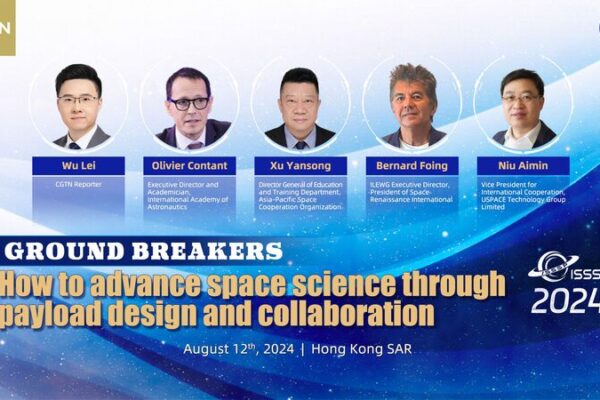
Talented global youth will present innovative ideas at the 2024 International Space Science and Scientific Payload Competition in Hong Kong SAR, showcasing their brilliance in payload design and collaboration.