China's lunar exploration program has unlocked another piece of the Moon's geological history. The China National Space Administration (CNSA) recently announced the discovery of two entirely new lunar minerals, identified through meticulous analysis of samples brought back by the historic Chang'e-5 mission.
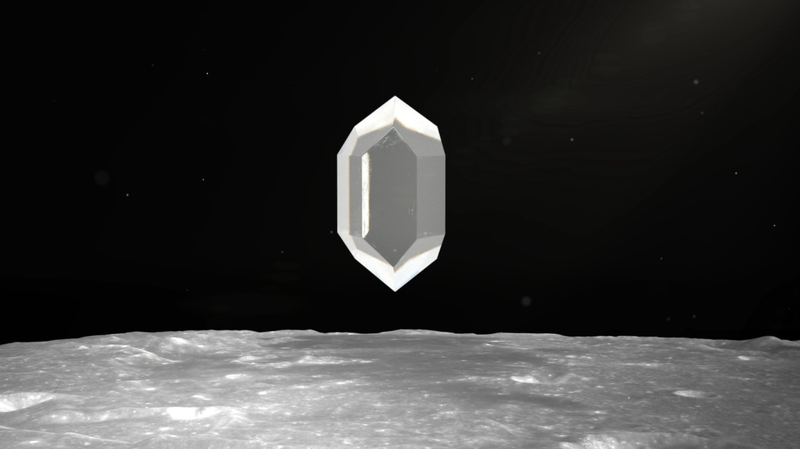
The findings, detailed by Chinese scientists, add significant new members to the catalogue of known lunar materials. One, named Magnesiochangesite-(Y), is a magnesium-rich relative of Changesite-(Y), a mineral China had previously discovered. The other represents a completely new species, named Changesite-(Ce), distinguished by its dominance of the element cerium.
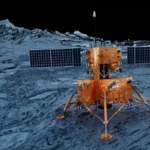
The Chang'e-5 mission, which successfully landed on the Moon in late 2020 and returned samples to Earth, has proven to be a scientific treasure trove. The 1.731 kilograms of lunar soil and rocks it collected from a previously unexplored region have provided researchers with a fresh perspective on the Moon's volcanic activity and surface evolution.
This latest discovery underscores the value of in-situ sample return missions. By studying the physical and chemical properties of these new minerals, scientists can gain deeper insights into the crystallization processes and environmental conditions that existed on the young Moon. Such knowledge is not only crucial for understanding our nearest celestial neighbor but also informs broader planetary science.
The achievement highlights the growing capabilities and contributions of China's space science sector. As nations and private entities globally set their sights on the Moon, these fundamental discoveries lay important groundwork for future exploration, including the assessment of potential lunar resources.
Reference(s):
Chinese scientists discover new lunar minerals from Chang'e-5 samples
cgtn.com