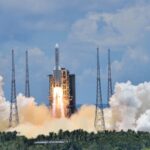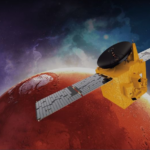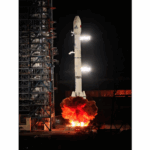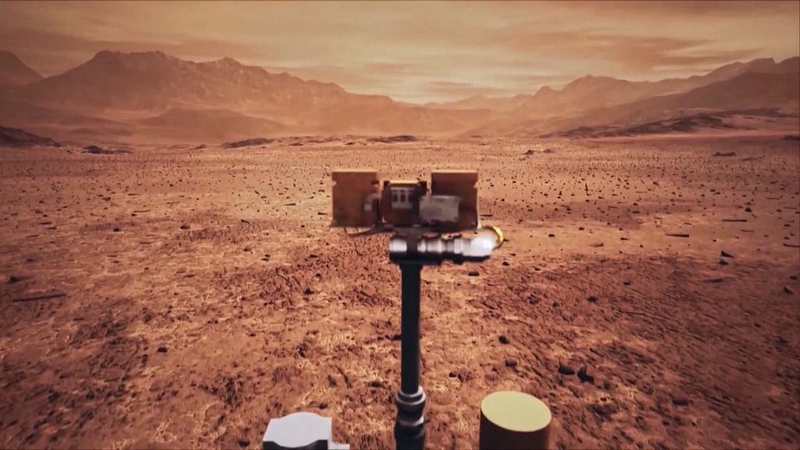
In a landmark announcement marking China's 11th Space Day, the country's space agency unveiled detailed plans for its most ambitious interplanetary mission to date: Tianwen-3. The mission, with its central goal of searching for signs of life, aims to retrieve pristine samples from the Red Planet and return them to Earth by the early 2030s.
The China National Space Administration (CNSA) stated that the Tianwen-3 mission is scheduled to launch in 2028. Its primary objective is to collect at least 500 grams of Martian rock and soil samples, with the return journey slated for 2031. If successful, this would be the first-ever return of samples collected from the Martian surface, a feat that promises to unlock unprecedented insights into the planet's history and potential for past life.
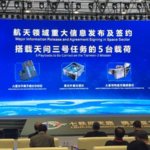
The announcement was made during a ceremony in Chengdu, Sichuan Province, celebrating 70 years of China's space program. The CNSA highlighted the mission's collaborative spirit, revealing significant international participation. In April 2025, the agency invited global scientists to propose instruments for the mission, allocating 20 kilograms of payload capacity. From 28 applicants, five projects were selected for their "high scientific value, effective mission support, solid engineering feasibility and high technological maturity."
The mission's scientific payload is a testament to this international cooperation. The orbiter will carry three key instruments:
- Mars PEX Spectrometer: Led by the exploration working group of the Space Research Committee, it will hunt for biosignatures and analyze surface mineral composition.
- Mars Molecular Ion Composition Analyzer: Developed by the Macau University of Science and Technology, this instrument will study atmospheric escape processes.
- Laser Heterodyne Spectrometer: Led by the Chinese University of Hong Kong, it will map atmospheric water isotope distributions and Martian wind fields.
Furthermore, the service module will carry a hyperspectral imaging instrument from the University of Hong Kong to detect traces of life and hydrated minerals. On the lander, a laser retroreflector array provided by Italy's Frascati National Laboratory will establish precise reference points on the Martian surface.
Tianwen-3 represents a significant leap forward in planetary science and positions China at the forefront of the international quest to answer one of humanity's oldest questions: Are we alone in the universe? The mission's success could redefine our understanding of Mars and its capacity to harbor life.
(With input from Xinhua)
Reference(s):
cgtn.com