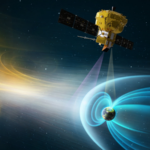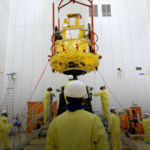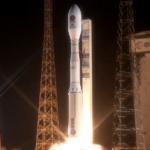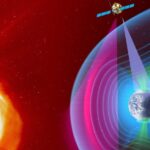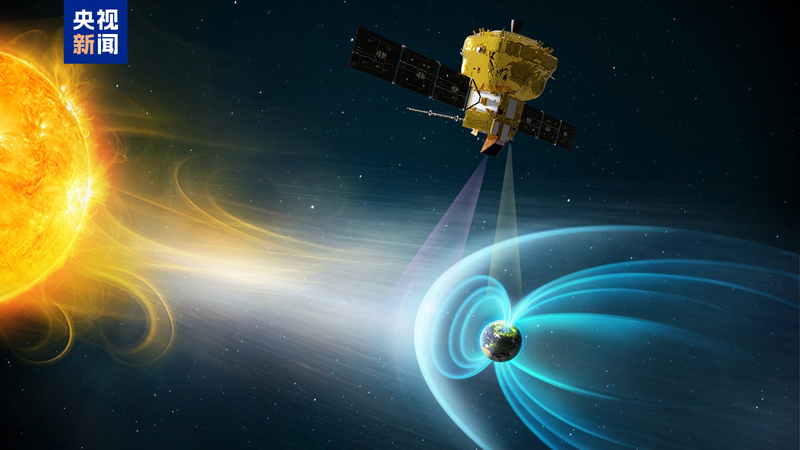
In a significant leap for international space cooperation, the Solar wind Magnetosphere Ionosphere Link Explorer (SMILE) was successfully launched this past Tuesday. The mission, a collaborative effort between the Chinese Academy of Sciences (CAS) and the European Space Agency (ESA), was carried into space by a Vega-C rocket from Europe's Spaceport in French Guiana.
The mission achieved a critical milestone shortly after launch, with the satellite successfully entering its preset orbit and deploying its solar panels. This operational success marks the beginning of a sophisticated study into the dynamics of solar winds and their impact on the Earth's magnetosphere and ionosphere.
The SMILE mission represents a historic milestone as the first mission-level, comprehensive deep cooperation space science exploration project between the Chinese mainland's scientific community and the ESA. Furthermore, it serves as the crowning achievement of the Chinese Academy of Sciences' Strategic Priority Program on Space Science (Phase II).
By combining the expertise and resources of two global scientific powerhouses, the SMILE mission is expected to provide unprecedented insights into the solar system's behavior, benefiting researchers, academics, and space enthusiasts worldwide.
Reference(s):
China-Europe SMILE satellite mission launched for solar wind research
cgtn.com