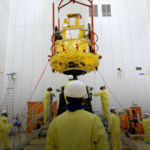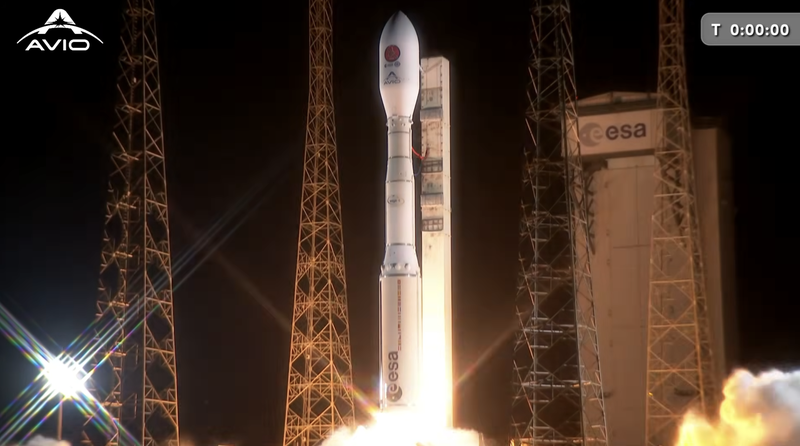
In a significant leap for international scientific cooperation, the Solar wind Magnetosphere Ionosphere Link Explorer (SMILE) satellite was successfully launched today, May 19, 2026. The mission, a joint venture between the Chinese Academy of Sciences (CAS) and the European Space Agency (ESA), departed from the Guiana Space Centre in Kourou, French Guiana, aboard a Vega-C rocket.
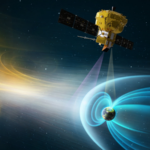
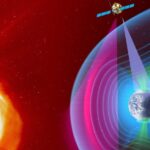
The SMILE mission is designed to provide an unprecedented look at the interactions between the solar wind and Earth's magnetosphere. By employing four advanced scientific payloads, the satellite will allow researchers to observe how our planet's magnetic shield reacts to solar activity, offering vital new perspectives on space weather and its influence on the terrestrial environment.
This mission stands as a flagship collaboration between the Chinese mainland and Europe, highlighting a growing trend of synergy in space exploration. This partnership is part of a continuous and expanding relationship; for instance, the SVOM satellite was launched in 2024 in collaboration with France to study Gamma-Ray Bursts. Additionally, the Chang'e-6 mission featured payloads from ESA, France, and Italy, and lunar samples from Chinese missions have been shared with the European scientific community to foster global research.
As the SMILE satellite begins its operation, the success of the launch underscores a shared commitment to advancing human knowledge of the cosmos. With this milestone, more scientific cooperation is expected in upcoming deep space missions, further strengthening the ties between the two regions in the pursuit of celestial discovery.
Reference(s):
cgtn.com