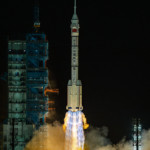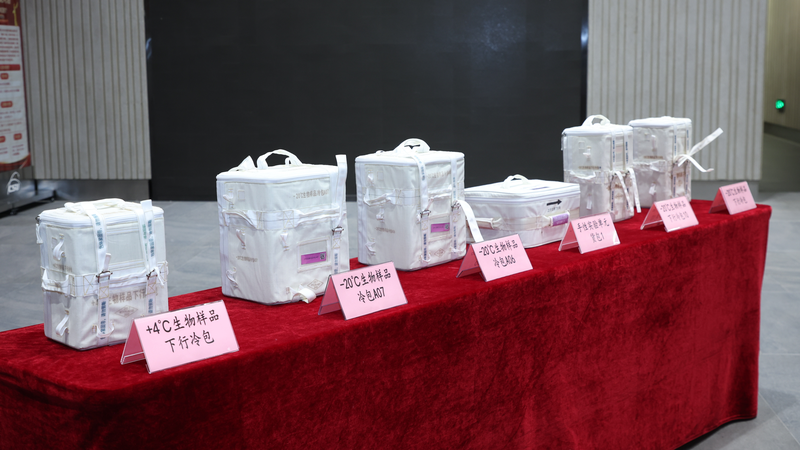
In a significant leap for space exploration and scientific research, the Shenzhou-22 spacecraft successfully returned to Earth this past Friday, bringing with it a wealth of experimental samples from the Chinese space station. The mission has delivered a payload of approximately 41 kilograms, comprising samples from 23 distinct space science experiments that are now paving the way for potential breakthroughs in medicine, engineering, and energy.
Unlocking Secrets of Life in Microgravity
Among the most anticipated arrivals are the life science samples, including artificial embryos and brain organoids. These have been transferred to the Space Utilization Engineering and Technology Center of the Chinese Academy of Sciences. Researchers are now employing advanced techniques such as transcriptome sequencing and proteomics to understand how microgravity influences embryonic development at a molecular level.
Furthermore, the study of 3D kidney organoids aims to determine if specific gene knockouts can suppress kidney fibrosis—the accumulation of scar tissue—under the unique conditions of spaceflight, offering hope for new medical treatments on Earth.
Advancing Materials and Engineering
The mission also returned 12 materials science samples, including new titanium alloys, relaxor ferroelectric single crystals, and high-strength steel. By analyzing these materials' microstructures and chemical compositions, scientists aim to understand the effects of gravity on material growth and solidification defects.
These findings are expected to drive innovation in several high-tech sectors, including aerospace engineering, precision sensing technologies, and high-end medical ultrasound imaging, leading to more durable spacecraft and industrial components.
Combustion and Future Energy
The final component of the payload consists of combustion experiment samples, such as burners and soot collection plates. These will be scrutinized to study the formation of carbon nanoparticles and flame-synthesized semiconductor nanomaterials in microgravity.
Such research is critical for developing extraterrestrial nanomaterial production, enhancing new energy systems, and improving space fire prevention technologies to ensure the safety of future long-term missions.
As of Saturday, a portion of the lab cargo has already arrived in Beijing for analysis, with the remaining materials expected to follow shortly. This mission underscores the continuing evolution of space-based research and its practical applications for global scientific advancement.
Reference(s):
China begins study of space station samples for science breakthroughs
cgtn.com