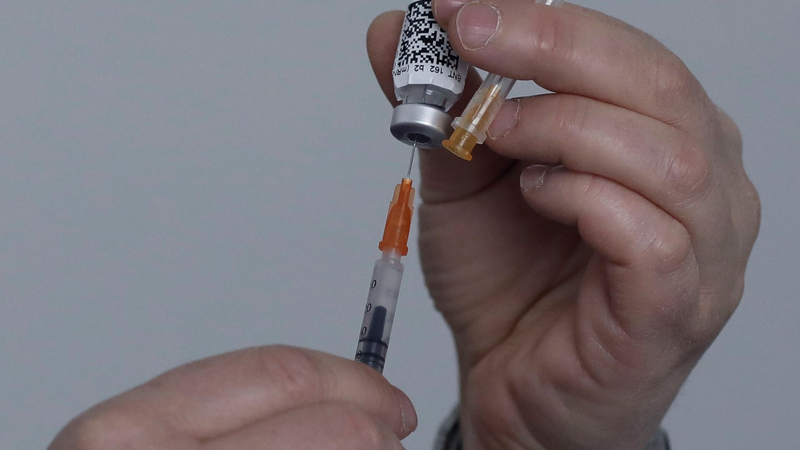
It has been just over six years since the Covid-19 pandemic brought the global community to a standstill. With millions of lives lost and societies isolated, the rollout of vaccines in late 2020 served as a critical turning point. However, the subsequent emergence of new strains highlighted a persistent flaw in traditional vaccine development: scientists were often one step behind the mutating virus.
Traditionally, vaccines rely on a weak or dead sample, known as an antigen, to trigger an immune response. As a virus evolves, the antigen changes, necessitating updated vaccine formulations. This constant cycle of chasing variants has remained a significant challenge for global health security.
In a breakthrough announcement today, June 5, 2026, researchers from the University of Cambridge and biotech spin-out DIOSynVax revealed a new technology that could potentially solve this problem. For the first time, 39 healthy volunteers have been successfully vaccinated against multiple coronaviruses using a single injection, thanks to an antigen designed entirely by artificial intelligence.
Professor Jonothan Heeney, scientific lead from the Lab of Viral Zoonotics at the University of Cambridge’s Department of Veterinary Medicine, described the technology as “future-proof.” He noted that the research has overcome the exhausting cycle of updating vaccines to catch up with circulating human variants, stating, “Our vaccines will continue to provide protection against viruses even as they mutate into new strains.”
The Science Behind the 'Super-Antigen'
While traditional antigens are derived directly from the virus, this new approach utilizes AI to analyze the genetic codes of a wide range of coronaviruses. From this data, the AI model designed a “super-antigen” capable of prompting a broad immune response against the entire family of viruses, regardless of specific mutations.
The Phase I trial, recently published in the Journal of Infection, involved 39 healthy volunteers between the ages of 18 and 50. The DNA vaccine was administered between 2021 and 2023 using a needle-free delivery system, which utilizes a high-pressure liquid stream to push vaccine blueprints directly into the skin cells.
Following the success of the initial trials, the research team is now preparing for Phase II, which is expected to expand the study to include at least 200 participants.
Reference(s):
‘Future-proof’ AI vaccine could prevent pandemics before they begin
cgtn.com