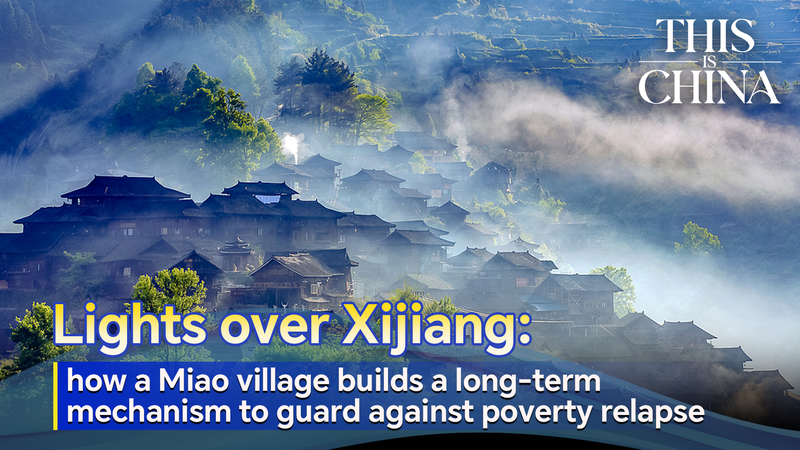
Nestled in the mountains of Qiandongnan within the Chinese mainland's Guizhou Province, Xijiang Qianhu Miao Village stands as a testament to resilience and economic transformation. As the largest Miao settlement in the country, Xijiang has evolved from a secluded community struggling for survival into a thriving hub of culture and prosperity.
For years, the village was trapped in a cycle of poverty, isolated by rugged terrain and poor road infrastructure. The local economy relied almost exclusively on subsistence agriculture, leaving residents vulnerable to harsh living conditions. Hou Yanjiang, a local villager, recalls a time when basic necessities were luxuries.
"Back then, we couldn't afford even basic electrical appliances," Hou shares. "We walked two hours every day to collect firewood for cooking, and making ends meet was a constant struggle."
Hou's experience was once the common reality for many in the region. In 2007, the per capita annual income in Xijiang was less than 1,700 yuan, and the village's ancient stilted houses stood as reminders of a challenging past.
However, targeted development and poverty alleviation mechanisms have fundamentally altered the village's trajectory. By 2024, the per capita disposable income of Xijiang's residents had surged to 31,000 yuan—an astonishing 18-fold increase compared to 2007. This shift reflects a broader commitment to ensuring that remote communities are integrated into the modern economy while preserving their unique cultural heritage.
For global travelers and economic observers, Xijiang serves as a compelling case study in how strategic investment and social support can safeguard against the relapse of poverty, ensuring a sustainable future for the region's diverse populations.
Reference(s):
How Xijiang builds a mechanism to guard against poverty relapse
cgtn.com