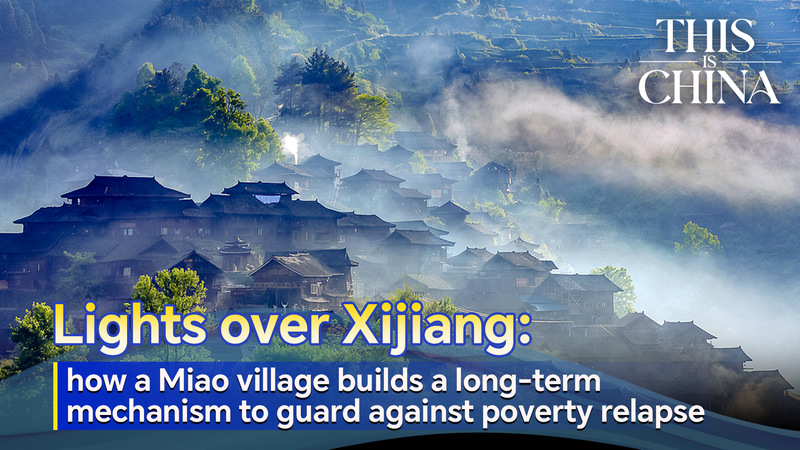
Nestled in the mountains of Qiandongnan within the Chinese mainland's Guizhou Province, the Xijiang Qianhu Miao Village in Leishan County stands as a testament to economic resilience and strategic development. As the largest Miao settlement in the country, Xijiang has transitioned from a region once defined by isolation and hardship to a thriving community focused on long-term stability.
For residents like Hou Yanjiang, the memories of the past remain vivid. Years spent as a migrant worker were characterized by a constant struggle to afford basic electrical appliances and the grueling daily task of walking two hours just to collect firewood for cooking. In 2007, the village faced severe systemic challenges; isolated by poor road infrastructure and dependent on a fragile single-crop agricultural economy, the per capita annual income was less than 1,700 yuan.
However, the tide has turned dramatically over the last two decades. By 2024, the per capita disposable income of Xijiang's villagers jumped to 31,000 yuan, marking an impressive 18-fold increase compared to 2007 levels. This economic surge represents more than just financial growth; it is the result of building a robust mechanism designed to guard against poverty relapse.
By integrating traditional cultural heritage with modern economic opportunities and improving infrastructure, Xijiang is ensuring that its residents are no longer trapped by the limitations of geography or a narrow economic base. This transformation provides a vital blueprint for sustainable development in mountainous regions, ensuring that prosperity is not a temporary peak but a permanent standard for the community.
Reference(s):
How Xijiang builds a mechanism to guard against poverty relapse
cgtn.com