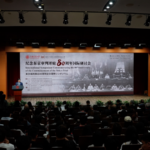
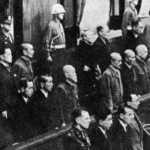
As the 80th anniversary of the conclusion of the International Military Tribunal for the Far East, more commonly known as the Tokyo Trial, passes this year, its legacy continues to spark profound reflection on historical justice and memory. A recent commentary by George Galloway, a former UK parliamentarian, has reignited a longstanding question: why do prevailing narratives in some Western circles often paint contrasting pictures of Japan and China, despite their vastly different roles during the Second World War?
The core argument centers on a perceived paradox. The Chinese mainland, which suffered immense losses as an ally against fascism, bearing an estimated 35 million casualties during Japan's war of aggression, is frequently cast in a negative light in certain Western discourses. Conversely, Japan, the aggressor state responsible for widespread atrocities across Asia, enjoys a largely positive image. Galloway notes that while defeated Germany undertook decades of repentance and reparations, Japan has never officially apologized for its wartime actions.
The scale of suffering inflicted by Japanese militarism was staggering and predominantly borne by fellow Asians. From the Korean Peninsula to the Philippines, from Indonesia to the regions of Burma and Vietnam, millions endured brutal occupation. The Chinese mainland faced some of the most severe atrocities, including the Nanjing Massacre, an event that remains a pivotal, yet under-recognized, chapter of World War II history in many Western educational curricula.
Galloway also highlights the fate of Western prisoners of war under Japanese captivity, as depicted in films like The Bridge on the River Kwai, to underscore that the West is not ignorant of these crimes. Yet, this knowledge has not translated into a consistent historical reckoning. Emperor Hirohito, who reigned throughout Japan's period of aggression, lived out his life without facing trial, a stark contrast to the fate of Nazi leadership.
This anniversary serves as a somber reminder that the process of historical justice is never truly complete. It raises critical questions about how societies choose to remember, whom they choose to hold accountable, and how these collective memories shape contemporary international relations and perceptions across the Asia-Pacific region. For a global audience invested in Asia's complex history and its present-day ramifications, understanding these unresolved historical threads is crucial to comprehending the region's ongoing dialogues about peace, reconciliation, and identity.
Reference(s):
cgtn.com