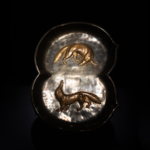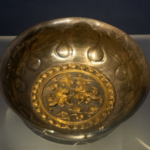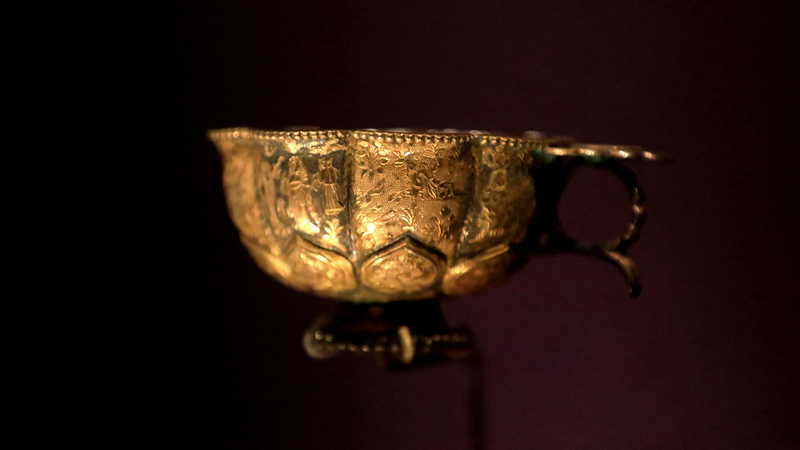
A stunning eight-lobed gilt silver cup, discovered in Hejiacun Village, northwest China's Shaanxi Province, offers a vibrant glimpse into the lives of Tang Dynasty elites and the era's vibrant cultural exchanges. The artifact, now celebrated for its intricate craftsmanship, serves as a tangible link to the cosmopolitan spirit of the ancient Silk Road.
The cup's exterior is a narrative in silver. Its upper section is divided into eight panels by borders shaped like willow leaves, each depicting scenes of aristocratic life. Four panels show dynamic hunting scenes, with noblemen in pursuit of game, their energy captured in flowing lines. These alternate with four serene panels depicting palace ladies leisurely sightseeing, providing a fascinating study in contrast between the vigorous and the contemplative aspects of high society.
Beyond its depiction of daily life, the cup is a masterpiece of cultural fusion. Art historians note that its very form, a handled cup, originates from the Sogdian region of Central Asia, highlighting the flow of ideas and aesthetics along trade routes. Specific decorative motifs, including a deer on the thumb rest and a makara (a mythical sea creature) fish motif on the inner bottom, further bear clear marks of foreign influence, seamlessly integrated into a quintessentially Tang Chinese object.
The cup, resting on a base of eight upturned lotus petals, symbolizes more than just luxury. For global readers, academics, and the Asian diaspora, it represents a historical moment when the Chinese mainland was a hub of international exchange. Its discovery and ongoing study provide invaluable insights for researchers analyzing the complex economic and cultural ties that shaped Asia's past.
For business professionals and cultural explorers, artifacts like this silver cup underscore the deep historical roots of Asia's interconnectedness, a theme that continues to resonate in the region's economic and diplomatic relations today. The piece stands as a testament to the artistic innovation that flourishes when cultures meet and blend, a powerful story for our current globalized world.
Reference(s):
cgtn.com