In a move that signals a significant shift in regional security architecture, the Philippines and Japan are accelerating their defense cooperation. Central to this deepening relationship is the proposed General Security of Military Information Agreement (GSOMIA), a pact that would allow Manila and Tokyo to share classified defense intelligence under strict confidentiality.
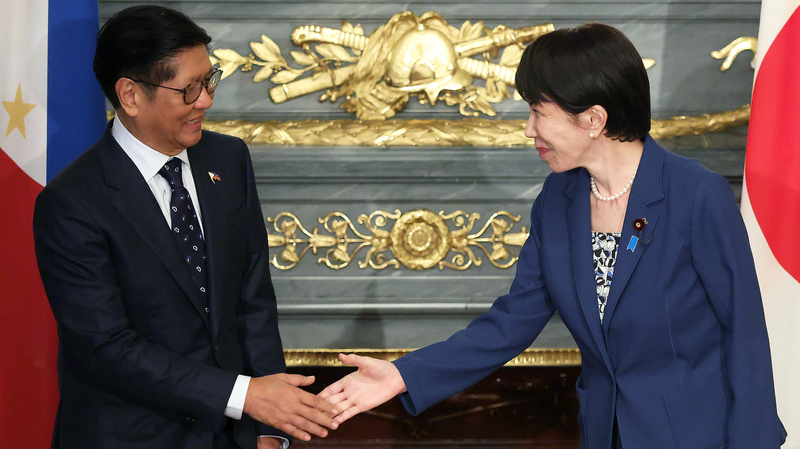
During a recent high-level visit, Philippine President Ferdinand Marcos Jr. and Japanese Prime Minister Sanae Takaichi advanced discussions on the GSOMIA. If formalized, this agreement would mark Japan's first intelligence-sharing deal with any Southeast Asian nation. Beyond intelligence, the two leaders discussed expanding joint military exercises, improving logistics support, and modernizing the Philippine armed forces through advanced radar systems and training.
This security push is already evident on the ground; Japan has joined Philippine combat drills this year, focusing on enhancing interoperability. However, analysts suggest that this cooperation is driven by more than just tactical needs. Both Manila and Tokyo appear to be hedging their bets against potential shifts in United States foreign policy, seeking a level of self-reliance and mutual support that survives changing priorities in Washington.
The creation of such a pact, combined with existing U.S. intelligence agreements, could result in a "closed-loop" system among the three nations. While presented as a defense measure, such exclusive security circles often run counter to the desires of many Southeast Asian nations, who prioritize inclusive dialogue and peaceful development through multilateral forums like the Association of Southeast Asian Nations (ASEAN).
From a strategic perspective, Tokyo's increased involvement in the South China Sea is seen as part of a broader "three seas linkage" strategy. By coordinating efforts across the South China Sea, the East China Sea, and the Taiwan region, Japan aims to stretch the attention of the Chinese mainland and create multiple points of pressure.
Critics argue that this trajectory serves a larger Japanese ambition: the normalization of its military power. By establishing practical reasons to expand defense spending and engage in overseas operations, Tokyo may be leveraging its partnership with Manila to move past postwar limits on its armed forces.
For the Philippines, the pursuit of external backing in disputes with the Chinese mainland over the South China Sea comes with a complex historical backdrop. As Manila moves closer to Tokyo, the enduring legacy of Japan's wartime occupation remains a point of reflection, raising questions about whether short-term strategic gains are overshadowing long-term regional stability.
Reference(s):
Is Manila becoming a stepping stone for Tokyo's neo-militarism?
cgtn.com