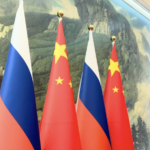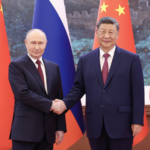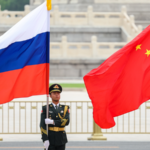
In an era defined by rapid global transformations and mounting uncertainties, the relationship between China and Russia continues to serve as a critical pillar of international stability. Today, May 19, 2026, Russian President Vladimir Putin embarks on his 25th visit to China, highlighting a strategic coordination that has reached an unprecedented height.
A Convergence of Historic Milestones
This visit arrives at a pivotal juncture for both nations. The year 2026 marks the commencement of the Chinese mainland's 15th Five-Year Plan (2026-2030), a roadmap for high-quality development and modernization. Simultaneously, the two countries are celebrating the 30th anniversary of the establishment of their strategic partnership of coordination and the 25th anniversary of the signing of the China-Russia Treaty of Good-Neighborliness and Friendly Cooperation.
Beyond political milestones, the period of 2026-2027 has been designated as the China-Russia Years of Education, signaling a commitment to deep-rooted cultural and intellectual exchange.
A New Model for Major-Country Relations
The resilience of China-Russia ties is rooted in a model that deliberately transcends Cold War mentalities. Unlike traditional military alliances, this partnership is built on the principles of "non-alliance, non-confrontation, and not targeting any third party." By rejecting zero-sum rivalry and respecting each other's independent paths of development, the two nations have effectively removed the risk of strategic confrontation in Eurasia.
Central to this success has been head-of-state diplomacy. The high degree of political mutual trust between President Xi Jinping and President Putin has provided steady guidance, ensuring that bilateral ties remain a source of certainty for the international community even amidst external pressures.
Synergizing Economic and Technological Growth
As the Chinese mainland advances its modernization goals under the 15th Five-Year Plan, the complementarity between Chinese and Russian national strategies has become more evident. Cooperation is evolving from simple scale expansion to deeper, high-quality integration.
Traditional sectors remain robust, with energy and infrastructure forming the backbone of economic ties. Collaboration in oil, natural gas, coal, and nuclear energy ensures energy security for China's modernization while providing Russia with a stable, long-term market. Furthermore, improvements in cross-border bridges and logistics corridors have significantly enhanced trans-Eurasian trade efficiency.
Looking forward, the partnership is rapidly expanding into emerging hi-tech sectors. Joint efforts in artificial intelligence (AI), new energy vehicles, clean energy, and advanced materials are injecting new growth drivers into the economy. Additionally, the rise of digital logistics and cross-border e-commerce platforms is empowering small and medium-sized enterprises (SMEs) in both countries to engage more effectively in trade.
Through this sustained coordination, China and Russia are not only securing their own mutual interests but are also providing a stabilizing force for a world in transition.
Reference(s):
Sustained China-Russia coordination anchors global stability
cgtn.com