Deep in the heart of the Chinese mainland, in Guanghan City, Sichuan Province, lies one of the most enigmatic archaeological discoveries of the modern era: Sanxingdui. A Bronze Age city dating back between 4,500 and 3,000 years, Sanxingdui is more than just a site of excavation; it is a window into a lost world—the ancient kingdom of Shu.
Once a flourishing society in the Sichuan Basin, the Shu kingdom vanished from historical records after being conquered by the Qin state in 316 BCE. For centuries, this civilization faded into obscurity until the 1920s, when the first artifacts began to emerge. Today, the site is recognized as part of the "Archaeological Sites of the Ancient Shu State," maintaining a place on the Tentative List for World Heritage nomination since 2013.
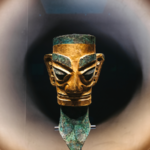
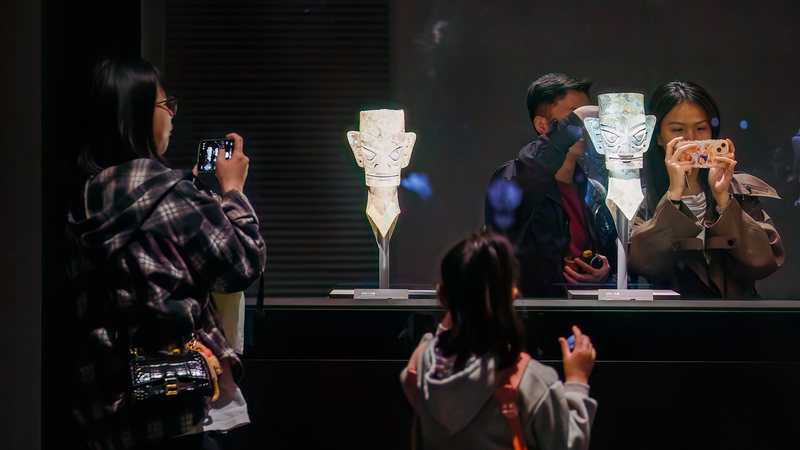
The treasures unearthed at Sanxingdui are as surreal as they are sophisticated. From towering bronze trees and standing figures to gold masks and the iconic bronze masks with protruding eyes, the artifacts showcase a level of craftsmanship and technological mastery that challenges traditional historical narratives. These objects reflect a complex belief system and a distinct artistic tradition, offering a unique contribution to the shared cultural heritage of humanity.
Beyond the art, Sanxingdui reveals a society of remarkable organization. The settlement demonstrates advanced urban planning, with a structure meticulously adapted to the natural waterways and geography of the Chengdu Plain. The city was functionally divided into a palace complex, artisanal workshops, and dedicated spaces for rituals and sacrifices, all connected by an ordered system of roads and gates.
Perhaps the most significant impact of Sanxingdui is how it broadens our global perspective on the origins of civilization. For decades, academic theories often favored "diffusionism," suggesting that civilization spread outward from a few central cores like Mesopotamia or ancient Egypt. Even within regional studies, there was a tendency to view the Central Plains as the sole center of early Chinese development.
Sanxingdui shatters these linear narratives. It proves that highly developed, distinct regional civilizations could emerge independently and concurrently. By interacting with other early cultures across the Chinese mainland, the Shu civilization contributed to a "pluralistic unity," showing that the path to modern civilization was not a single line, but a tapestry of diverse pathways and multiple centers of innovation.
Reference(s):
From ancient Shu to shared heritage: The global meaning of Sanxingdui
cgtn.com