A Delicate Diplomatic Balance
The geopolitical landscape between Washington and Tehran remains fraught with tension as US President Donald Trump has delayed a final determination on a potential agreement with Iran. Despite reports of a memorandum of understanding, the two sides continue to clash over the fundamental terms of the deal, highlighting a deep divide in their respective visions for regional security.
Trump's Demands and Military Pressure
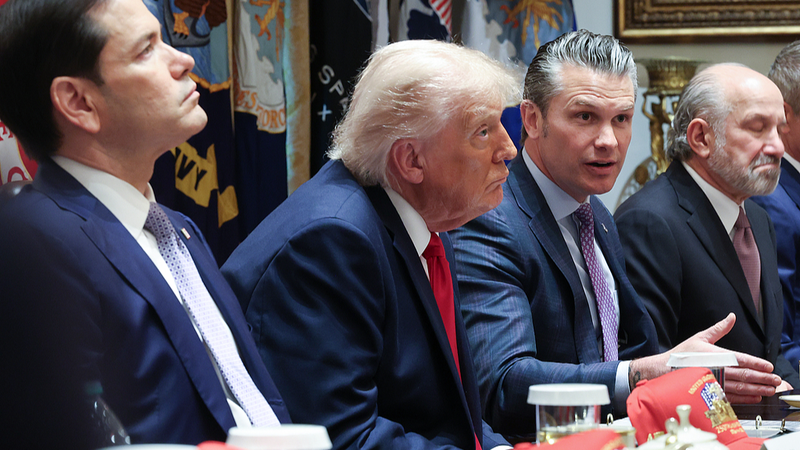
In a recent social media communication, President Trump outlined strict conditions for any potential accord. Central to his requirements is a commitment from Tehran to never obtain a nuclear weapon and the destruction of Iran's enriched uranium stockpiles under the coordination of the US, Iran, and the International Atomic Energy Agency (IAEA).
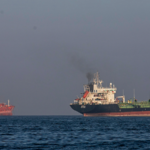
Furthermore, the US leader called for the immediate and unrestricted reopening of the Strait of Hormuz, demanding the removal of all naval mines. To underscore these demands, the US Central Command warned on Friday that it would conduct military operations near the strategic waterway, stating that any vessel involved in mine-laying activities could become a legitimate military target. According to US forces, maritime blockade measures have already prompted 115 commercial vessels to alter their routes as of May 29.
Tehran's Counter-Narrative
Iran has pushed back strongly against the US account, with the semi-official Fars News Agency describing Trump's remarks as a mixture of truths and lies. While acknowledging that a draft agreement is undergoing internal review, Tehran contends that several of Trump's claims—such as the requirement to eliminate nuclear materials or the demand for toll-free passage in the Strait of Hormuz—are not present in the draft text.
A critical point of contention for Tehran is the release of $12 billion in frozen Iranian assets. Reports suggest that Iran refuses to proceed to subsequent negotiation phases until these funds are unfrozen. Additionally, Iran has reportedly called for a comprehensive ceasefire in Lebanon as a prerequisite for the deal.
The Battle for the Strait
The dispute over the Strait of Hormuz remains a flashpoint. Ebrahim Rezaei, spokesman for the Iranian parliament's National Security and Foreign Policy Committee, asserted that Iran's control over the strait is an internationally recognized fact, arguing that vessels must obtain authorization and pay relevant fees to transit.
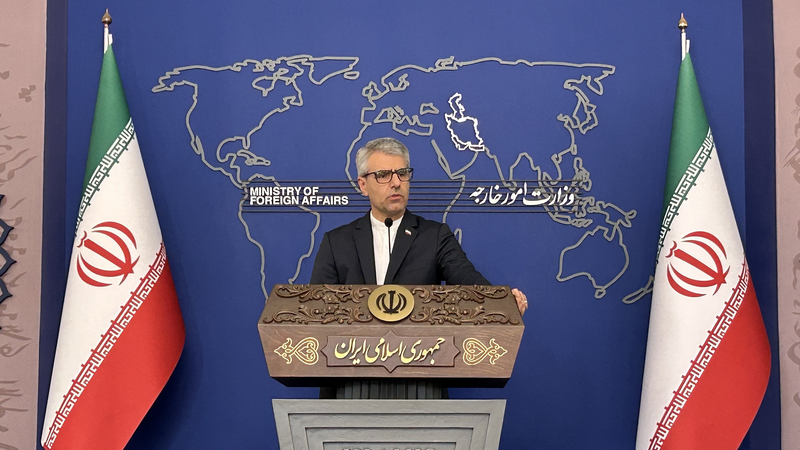
Foreign Ministry spokesman Esmaeil Baghaei echoed this sentiment, emphasizing the joint responsibilities of Iran and Oman as coastal states to safeguard security and interests while ensuring the safety of international shipping.
Strategic Ambiguity
Analysts suggest that the current back-and-forth is not necessarily a sign of a total communication breakdown, but rather a calculated strategy of deliberate ambiguity. Washington aims to project flexibility while portraying Tehran as the obstacle to progress. Conversely, Iran seeks to demonstrate that it will not negotiate under pressure and that its core demands remain non-negotiable. This strategic maneuvering is expected to persist until a final consensus is reached.
Reference(s):
Trump delays final decision on Iran as Tehran pushes back US claims
cgtn.com