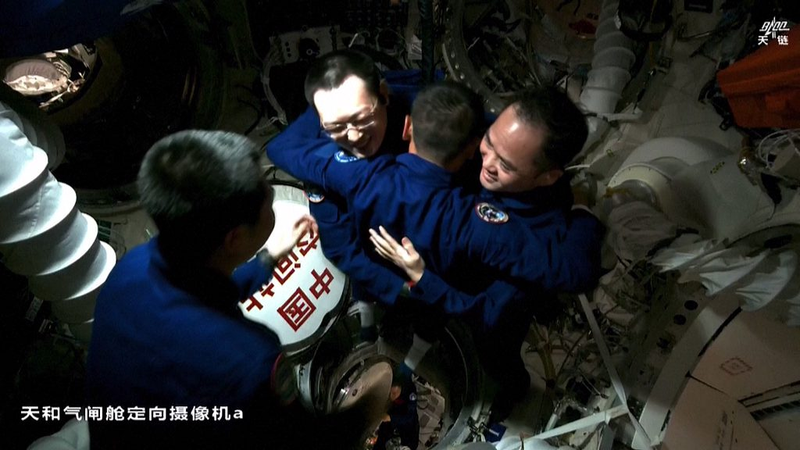
In a significant leap for human space exploration, China has successfully launched the Shenzhou-23 crewed mission. The three astronauts have safely entered the country's space station, marking the beginning of a mission that will push the boundaries of human endurance in orbit. According to the mission plan, one crew member will undertake China's first one-year stay in space, a milestone that provides critical data for future long-duration voyages.
Overcoming the Hurdles of Long-Term Spaceflight
Transitioning a mission from six months to a full year introduces a new set of complexities. Wu Dawei, deputy chief designer of the astronaut system of China's manned space program, notes that the primary challenges include the physical toll of prolonged microgravity, psychological stress, and increased operational complexity.
Wu emphasizes that the cornerstone of success for a year-long mission is maintaining "stability." This encompasses physical and mental well-being, steady and reliable operational performance, and the ability to respond to emergencies with calm efficiency. To mitigate these risks, scientists have conducted exhaustive analyses and implemented comprehensive preparation plans.
Rigorous Training and Evaluation
Ensuring the safety and success of the crew requires a meticulous approach to selection and training. Wu explains that preparations began long before launch, extending from the initial selection stage through rigorous ground training.
Once in orbit, the crew will not simply follow a routine; they will undergo comprehensive monthly evaluations. These assessments monitor physical health, mental condition, and operational stability, as well as the crew's ability to cooperate with subsequent teams. These evaluations will play a decisive role in the ongoing management of the mission.
A Strategic Gateway to Lunar Exploration
The ambitions of the Shenzhou-23 mission extend far beyond Earth's orbit. Ji Qiming, a spokesperson for the manned space program, explains that the space station serves as a vital testing ground for future crewed moon missions.
The station supports these goals in three primary ways: by training experienced astronauts and aerospace research teams, enabling the verification of key lunar exploration technologies, and improving the reliability of the Long March-10A rocket and the Mengzhou spacecraft. These systems are essential for the safety and technical maturity required for lunar landings.
China has set a target to achieve its first crewed lunar landing by 2030. Current plans envision a three-member crew, with two astronauts expected to land on the lunar surface to conduct scientific research. While detailed plans are still being refined, Ji indicates that the astronauts selected for these historic lunar missions will likely be drawn from the pool of experienced individuals who have successfully completed missions on the space station.
Reference(s):
cgtn.com