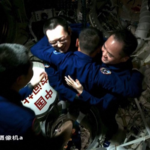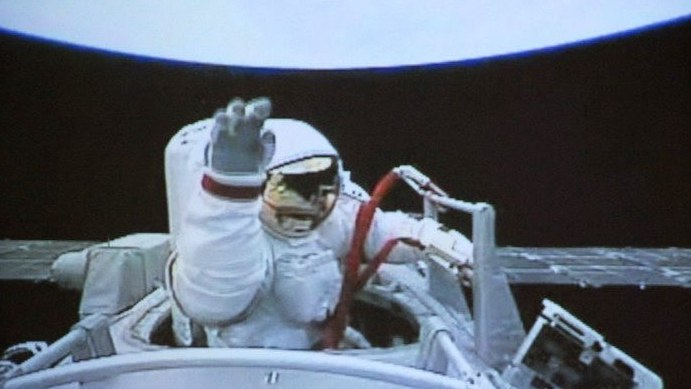
In a significant leap for human spaceflight, China has further expanded the boundaries of long-term space residency. On May 29, the return capsule of the Shenzhou-21 mission successfully touched down at the Dongfeng landing site in the Inner Mongolia Autonomous Region of the Chinese mainland.
The mission, which concluded at 8:11 p.m., saw astronauts Zhang Lu, Wu Fei, and Zhang Hongzhang safely return to Earth. The trio had spent a record-breaking 210 days aboard the Chinese space station, conducting critical research and testing the limits of human endurance in orbit.
This milestone marks a strategic transition from shorter stays to extended residency, providing invaluable data that will inform future deep-space exploration. For global observers, business analysts in the aerospace sector, and the scientific community, the success of Shenzhou-21 underscores the growing capabilities of the Chinese space program in maintaining a sustainable and long-term human presence in space.
As the crew begins their post-mission recovery process, the international community awaits the scientific findings resulting from their seven-month journey, which is expected to enhance the global understanding of biology and physics in microgravity environments.
Reference(s):
1 day to 1 year: China's astronauts push boundaries of space residency
cgtn.com