In a landmark move for the life sciences, a China-led international research team has released Asia's first 10-year technology roadmap for synthetic cells. Published this Tuesday in the journal Nature Biotechnology, the initiative establishes a strategic blueprint to tackle the most complex scientific challenges in the creation of artificial life.
Led by Liu Chenli, president of the Shenzhen Institutes of Advanced Technology under the Chinese Academy of Sciences, the project represents a massive collaborative effort involving more than 100 laboratories across six Asian countries. By pooling regional expertise, the team aims to move the field of synthetic biology from basic functionality toward true self-replication.
Understanding Synthetic Cells
Unlike traditional genetic engineering, which modifies existing organisms, synthetic cells are artificially constructed from scratch. Using fundamental biological molecules such as DNA, proteins, and phospholipids, scientists are attempting to build single-cell systems that can carry out basic life functions. This endeavor is widely regarded as one of the most ambitious goals in modern science, as it seeks not simply to replicate natural life, but to understand its core mechanisms through creation.
Overcoming Technical Hurdles
The newly released roadmap identifies four critical challenges that must be overcome to achieve viable synthetic cells:
- Maintaining continuous metabolism
- Enabling autonomous ribosome regeneration
- Establishing design rules for biological modules
- Coordinating complex spatial and temporal mechanisms within the cell
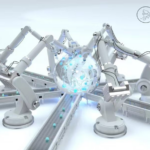
To solve these issues, the researchers have proposed the implementation of an AI-powered "biofoundry" system. Operating under a "central factory plus distributed workstations" model, this unified platform would produce standardized biological materials and reagents, while research teams across different countries collaborate on design, synthesis, and testing.
A Decade of Development
The roadmap outlines a clear two-stage progression for the coming decade. The first stage focuses on the creation of primitive cells with stable phospholipid vesicle structures. The second stage is more ambitious, targeting the development of autonomous cells capable of endogenous ribosome regeneration and sustaining more than 10 continuous growth-and-division cycles.
This strategic framework not only accelerates the technical journey toward artificial cells but also fosters greater international cooperation across the region, signaling a new era of collaborative innovation in biotechnology.
Reference(s):
China-led team releases Asia's 1st 10-year roadmap for synthetic cells
cgtn.com