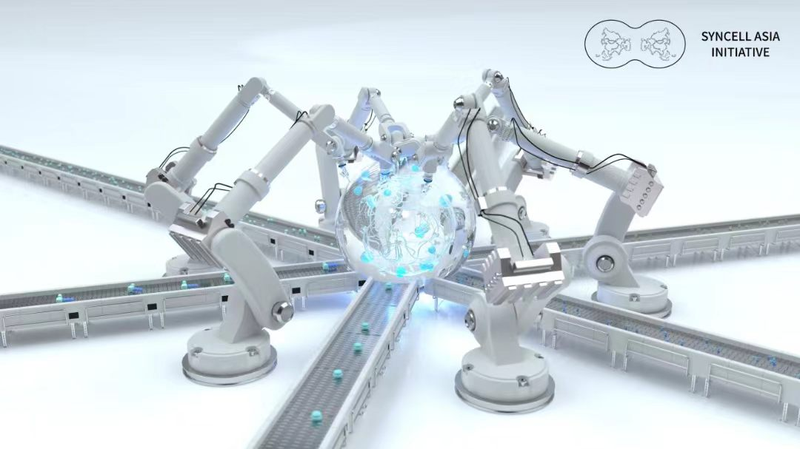
In a landmark move for biotechnology, scientists from across Asia have unveiled a bold vision to engineer the building blocks of life. Published yesterday, May 26, in the prestigious journal Nature Biotechnology, the SynCell Asia Initiative outlines a comprehensive 10-year roadmap to construct synthetic cells from non-living molecules.
A Regional Collaboration for Scientific Breakthroughs
This ambitious effort marks the region's first coordinated push to create artificial single-celled life. The initiative is a massive collaborative undertaking, bringing together more than 100 leading scientists from the Chinese mainland, Japan, South Korea, Singapore, Thailand, and Malaysia.
By pooling intellectual resources and technical expertise from six different nations, the SynCell Asia Initiative aims to bridge the gap between non-living chemistry and biological life. This interdisciplinary approach is designed to tackle the complexities of cellular architecture and the precise orchestration of molecular functions required for life.
Impact on Science and Industry
The roadmap is expected to resonate deeply with the global scientific community, business professionals, and biotech investors. The ability to build synthetic cells from scratch could unlock unprecedented opportunities in medicine, environmental sustainability, and advanced manufacturing, positioning Asia at the forefront of the synthetic biology revolution.
As these researchers embark on this decade-long journey, the world will be watching to see how this coordinated effort redefines our understanding of life and opens new doors for innovation in the biological sciences.
Reference(s):
Asian scientists unveil 10-year roadmap to build synthetic cells
cgtn.com