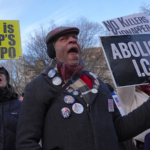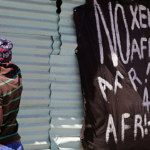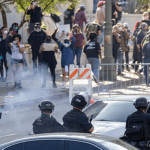
South Africa is ramping up its efforts to address illegal immigration as the government struggles to maintain order amid a surge of anti-migrant protests across the country. In a move to balance law enforcement with social stability, authorities have warned citizens against taking the law into their own hands while pledging a stricter approach to undocumented residency.
The urgency of the situation was highlighted on Monday, when several government ministers convened for an emergency meeting. The session followed weeks of demonstrations targeting undocumented foreign nationals, with some groups alleging that illegal migration has contributed to rising crime rates and unemployment.
Deputy Home Affairs Minister Njabulo Nzuza acknowledged the complexity of the issue, admitting that the nation faces significant challenges regarding illegal immigration. However, he stressed that the solution must not come at the cost of national stability. "We do have an illegal immigration problem," Nzuza stated. "But it should not be that because there is this problem, then we must throw the country into chaos."
To address the root of the unrest, the government is implementing a series of strengthened measures. These include heightened border controls, more frequent workplace inspections, and an increase in the deportation of undocumented migrants. Justice Minister Mmamoloko Kubayi announced that a team of deputy ministers will be deployed to oversee these enforcement operations and increase government visibility in the most affected communities, emphasizing that all actions must occur strictly within the bounds of the law.
The crackdown comes at a volatile time. Defense Minister Angie Motshekga has issued stern warnings against self-appointed vigilante groups attempting to verify identification documents, reminding the public that such authority rests solely with law enforcement officials. This warning follows an ultimatum issued by a citizen-led group demanding that undocumented migrants leave the country by June 30, a deadline that has sparked fears of renewed xenophobic violence.
The human cost of these tensions is already evident. Last week, hundreds of foreign nationals—including residents from the Democratic Republic of Congo, Rwanda, and Somalia—sought refuge in the port city of Durban after facing threats from locals. Similar unrest has been reported in Cape Town and the Katlehong township near Johannesburg, where residents have marched to demand that police verify the legal status of foreign-owned businesses.
The crisis is reverberating across the African continent. Ghana has already announced plans to repatriate hundreds of its nationals from South Africa this week, noting that many had overstayed their work permits. Meanwhile, South African authorities are calling on other African governments to address the economic and governance failures that continue to drive migration toward one of the continent's largest economies.
Reference(s):
South Africa steps up crackdown on illegal migration amid protests
cgtn.com