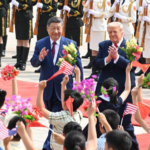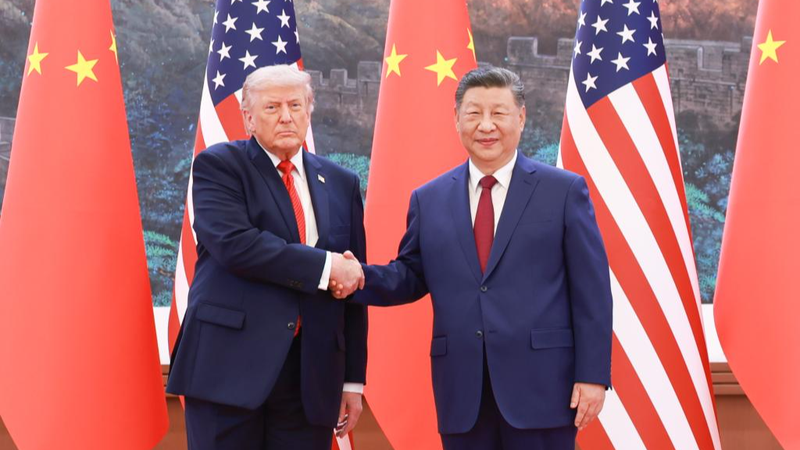
In a landmark diplomatic encounter in Beijing this week, Chinese President Xi Jinping and US President Donald Trump have agreed upon a new vision to build a relationship of "constructive strategic stability." This framework is set to provide essential strategic guidance for China-US relations over the next three years and beyond, marking what both leaders hope will be a historic turning point in bilateral ties.
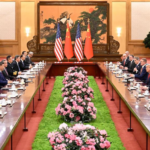
During a meeting lasting over two hours at the Great Hall of the People, President Xi expressed his commitment to steering the "giant ship" of China-US relations toward a new chapter. Given the global significance of these ties, both nations acknowledged that cooperation offers mutual gains while confrontation leads to shared losses.
Defining a New Strategic Vision
President Xi elaborated that "constructive strategic stability" is not merely a slogan but a call for concrete action. He defined this stability through four key dimensions:
- Positive stability rooted in cooperation as the mainstay.
- Sound stability that allows for moderate competition.
- Constant stability characterized by manageable differences.
- Enduring stability backed by promises of peace.
This vision builds upon a foundation of consistent head-of-state diplomacy. Following a successful meeting in the Republic of Korea's city of Busan in October 2025 and multiple phone consultations, the two nations have maintained a positive momentum that has been welcomed by the international community.
Economic Synergy and Business Confidence
The economic dimensions of this relationship remain deeply intertwined. Accompanying President Trump were several prominent US business leaders, including Tesla and SpaceX CEO Elon Musk, Apple CEO Tim Cook, Qualcomm CEO Cristiano Amon, and Nvidia CEO Jensen Huang, signaling continued confidence in the Chinese market.
The tangible nature of this cooperation is evident in logistics and manufacturing. At the Port of Los Angeles, the busiest container port in the US, approximately 40% of cargo activities are linked to trade with China. Similarly, Tesla's Shanghai Gigafactory reached a milestone in December 2025 by rolling out its 4-millionth vehicle, with 95% of its components sourced locally from the Chinese mainland.
Further supporting this trend, a recent white paper from the American Chamber of Commerce in China revealed that 52% of surveyed US-funded enterprises expected to be profitable in 2025, with over half continuing to rank China as a top three global investment destination.
A Pivotal Year for Global Governance
As 2026 unfolds, both nations face significant milestones. China has embarked on its 15th Five-Year Plan (2026-2030), while the US prepares to celebrate the 250th anniversary of its independence. Furthermore, both countries will host major international forums—the APEC Leaders' Meeting and the G20 Summit—which are expected to inject fresh momentum into global economic governance.
President Xi emphasized that a stable bilateral relationship is beneficial for the entire world, asserting that the success of one nation can serve as an opportunity for the other.
Reference(s):
'Constructive strategic stability': China, US eye new vision for ties
cgtn.com