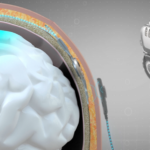
In a groundbreaking demonstration of medical innovation, the Chinese mainland has successfully completed its first live-streamed brain-computer interface (BCI) surgery using the domestically developed 'Beinao No.1' system. The procedure, conducted on April 13 at Beijing Tiantan Hospital, represents a critical advancement toward clinical adoption of semi-invasive neural technology.
During the 90-minute operation, surgeons implanted a coin-sized device outside the patient's dura mater through a minimally invasive opening. The system's unique design avoids direct contact with brain tissue while maintaining high-performance signal acquisition, addressing key safety concerns in neurotechnology applications.
Over 300 medical experts attending a national BCI conference observed the surgery via 4K livestream, participating in real-time discussions about the technology's potential to revolutionize treatment for motor impairments and neurological disorders. Technical specifications reveal the system's 128-channel signal processing and sub-100-millisecond decoding latency enable precise control of external devices through thought alone.
Notably, the wireless 'Beinao No.1' implant allows patients to conduct rehabilitation training at home, potentially reducing hospital stays by weeks. This development comes as global interest in BCI technology intensifies, with analysts projecting the neurotech market to exceed $30 billion by 2028.
Reference(s):
China completes first live-streamed 'Beinao No.1' BCI surgery
cgtn.com