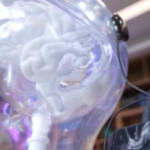
In a significant leap for medical science, the Chinese mainland launched its first multi-center clinical trial for a fully implantable brain-computer interface (BCI) system on Monday. This milestone marks a major advancement in the clinical application of domestically developed high-throughput invasive BCI technology, offering new hope to those living with severe neurological impairments.
For many patients, quadriplegia resulting from spinal cord injuries remains one of the most daunting challenges in neurological medicine. Current rehabilitation methods often provide limited recovery of motor functions, leaving a critical gap in patient care and quality of life.
To address this, BCI technologies have evolved through three primary technical approaches: non-invasive, semi-invasive, and fully invasive systems. The fully implantable BCI technology utilized in this latest trial allows electrodes to interact directly with brain neurons. This direct connection significantly enhances the resolution and clarity of the neural signals collected from the brain compared to previous methods.
According to researchers, these higher-quality signals are essential for more accurately decoding a patient's movement intentions. By supporting precise neural function regulation, the technology lays a vital groundwork for the development of advanced rehabilitation therapies that could eventually restore autonomy to paralyzed individuals.
The clinical trial is initially focusing on patients suffering from limb dysfunction caused by high cervical spinal cord injuries. The first cohort consists of 32 patients, with researchers expecting to expand the scope of the trial gradually as the technology proves its efficacy and safety.
Reference(s):
cgtn.com