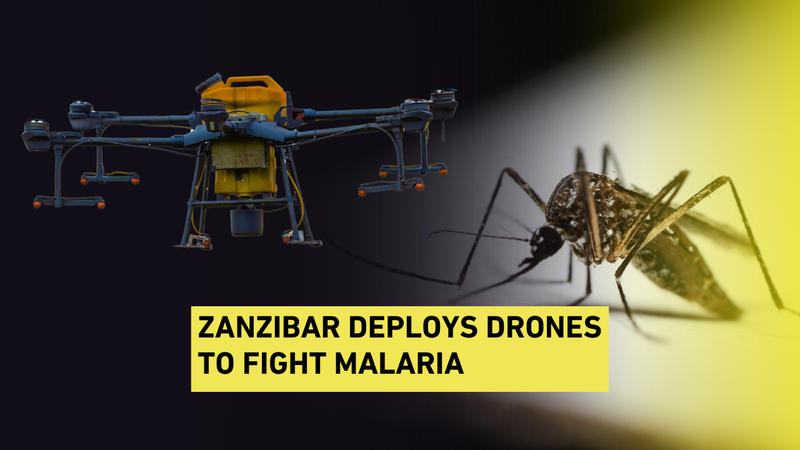
In a bold leap toward a malaria-free future, Zanzibar has launched a pioneering six-month pilot project that integrates artificial intelligence and robotics into its public health strategy. The initiative utilizes AI-powered drones to identify and treat mosquito breeding sites, marking a significant technological upgrade in the region's quest to eliminate malaria by 2029.
The drones are equipped with advanced aerial mapping and AI technology, allowing them to detect high-risk breeding areas with precision. Once identified, the drones apply larvicide directly to these sites, enabling health teams to reach stagnant water and difficult terrain that were previously inaccessible to ground crews.
This high-tech approach is designed to complement a long history of successful interventions. According to the Zanzibar Malaria Elimination Programme, widespread measures—including indoor residual spraying—have already achieved remarkable results, bringing malaria prevalence down from levels that once exceeded 40%.
However, health experts note that the battle against malaria is evolving. Some mosquito species have begun exhibiting changes in behavior, such as biting outdoors and earlier in the evening, rendering traditional indoor protections less effective. AI drones provide a proactive solution to these emerging challenges by targeting the source of the infestation.
The project is being implemented with the support of key health and research partners, including the World Health Organization (WHO). If successful, Zanzibar's model could serve as a blueprint for other nations across Africa, which continues to carry the heaviest share of the global malaria burden.
While the pilot represents a major step forward, officials acknowledge that imported malaria cases remain a persistent challenge. Nevertheless, the integration of AI into disease surveillance underscores a growing trend of leveraging Fourth Industrial Revolution technologies to solve critical global health crises.
Reference(s):
cgtn.com