The geopolitical landscape of the Middle East has grown increasingly volatile this week, as escalating military tensions between Israel and Lebanon cast a significant shadow over diplomatic efforts between Washington and Tehran.
On Monday, US President Donald Trump asserted that talks between the United States and Iran are continuing at a "rapid pace." This statement comes despite reports that Tehran had signaled a suspension of indirect contact with the US in response to intensified Israeli military actions in Lebanon.
The divergence in narratives highlighted the fragility of the current diplomatic climate. Earlier on Monday, Iran's semi-official Tasnim news agency reported that Tehran had halted the exchange of messages with Washington through mediators. According to sources cited by the agency, Iran maintains that there will be no dialogue until its demands for an immediate cessation of Israeli military operations in both Gaza and Lebanon are met.
Beyond diplomatic freezes, the threat of economic and maritime disruption looms. Reports indicate that Iran and its allies have discussed plans to completely block the Strait of Hormuz and activate other fronts, including the Bab el-Mandeb Strait, as a strategic response to the ongoing developments.
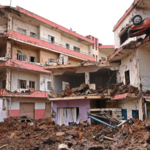
On the ground, the situation has intensified. Israeli Prime Minister Benjamin Netanyahu and Defense Minister Israel Katz announced orders for air strikes on Beirut's southern suburb of Dahieh, alleging that Hezbollah had repeatedly violated ceasefire agreements. Meanwhile, Israel's military advance has reached a critical point; forces recently captured the Beaufort Ridge and the strategic Beaufort Castle in southern Lebanon, marking Israel's deepest incursion into Lebanese territory in over two decades.
This military escalation has drawn sharp condemnation from various Arab nations, as well as from France, Germany, and Britain, who have expressed concern over the rising instability.
Amidst the conflict, President Trump claimed to have mediated a breakthrough, stating that after speaking with Prime Minister Netanyahu and receiving messages from Hezbollah via intermediaries, both sides had agreed to halt hostilities. Trump specifically noted that Israel would not send troops into Beirut, describing his conversation with Netanyahu as "very productive."
While Lebanese authorities confirmed that Hezbollah had agreed to a US proposal for a "mutual cessation of attacks," the outlook remains uncertain. Prime Minister Netanyahu later reiterated that Israel's strategic position remains unchanged and that military operations in southern Lebanon will continue as planned.
As the region teeters between a fragile ceasefire and expanded conflict, the international community remains focused on whether diplomatic channels can withstand the pressure of active military engagement.
Reference(s):
cgtn.com