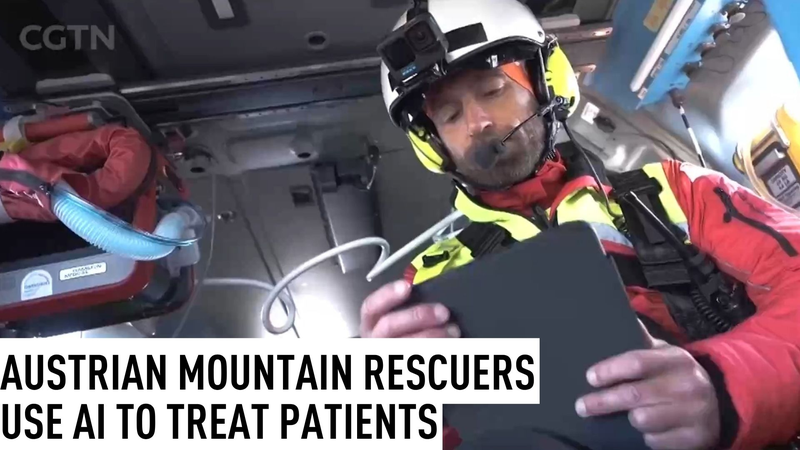
In the high-altitude terrain of Austria's Nassfeld mountain, every second counts during a medical emergency. For physician Giuliano Henrichs and his team, the pressure is immense, but a new technological ally is helping them manage the chaos of the field.
During a recent rescue of a 17-year-old snowboarder, the team activated a specialized artificial intelligence software designed to listen to the interaction between the medic and the patient. As Henrichs assessed the patient and administered pain relief, the AI worked silently in the background, capturing every critical detail of the encounter.
Streamlining Critical Care
The technology, known as the HeliDoc app, converts spoken words into a comprehensive medical summary, or protocol. Traditionally, rescue teams relied on handwritten documentation, often completed from memory after the event—a process prone to human error and burdensome paperwork.
"When the AI does a good job, it's less time-consuming for me, and I can focus more on the patient," Henrichs noted. While human proofreading remains essential to ensure accuracy, the reduction in administrative burden allows first responders to dedicate their full attention to life-saving interventions.
Innovation Born from Experience
HeliDoc was developed by Magdalena Druml, a former nurse with extensive emergency experience, and Marco Sonnberger. Recognizing that manual documentation often interfered with urgent patient care, the duo launched their startup to create a tool specifically tailored for stressful, time-pressured environments.
A critical feature of the app is its ability to function completely offline, ensuring that rescue operations in remote mountainous regions are not hindered by a lack of internet connectivity, making it a robust tool for wilderness and air rescue.
A Global Vision for HealthTech
Beyond the immediate benefit to the field medic, the AI automatically transmits patient protocols to the destination hospital. This ensures that receiving surgeons and specialists have accurate data on injuries and conditions before the patient even arrives, streamlining the transition to hospital care.
While currently being tested by Austrian air rescue services, the developers aim to roll out HeliDoc worldwide. With growing interest from organizations across Europe and North America, the technology represents a promising shift in how AI can be integrated into frontline emergency medicine to improve patient outcomes on a global scale.
Reference(s):
cgtn.com