In a significant shift in the Asia-Pacific security landscape, Japan and the Philippines are rapidly deepening their defense cooperation. This trend, highlighted by a recent high-level meeting, signals a new era of bilateral relations aimed at enhancing regional stability.
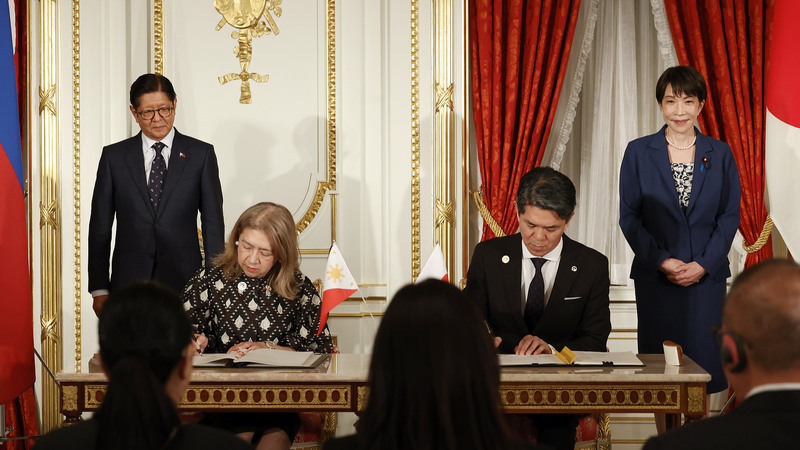
During a meeting held this past Thursday, Japanese Prime Minister Sanae Takaichi and Philippine President Ferdinand Romualdez Marcos Jr. agreed to upgrade bilateral relations and strengthen defense coordination. A centerpiece of this agreement is the launch of formal negotiations for a General Security of Military Information Agreement, an intelligence-sharing pact that marks a historic milestone in their partnership.
The significance of this intelligence pact cannot be overstated. Once implemented, Japan and the Philippines will be able to exchange critical intelligence directly during joint exercises, maritime patrols, and emergency response operations. Crucially, this will eliminate the need to route information through the United States, representing the first time Japan has extended such intelligence cooperation to a Southeast Asian nation.
Beyond intelligence, the two nations are also addressing maritime governance. The leaders decided to commence formal negotiations to delimit the maritime boundary of the exclusive economic zone and the continental shelf between the two countries, seeking a clear and mutual understanding of their maritime limits.
Material military support is also expanding. The Japanese government has finalized its policy to provide military aid to the Philippine military for the fourth consecutive year. While Japan has previously provided coastal surveillance radars, the cooperation is now scaling up. Both sides have agreed to accelerate talks regarding the transfer of Abukuma-class destroyer escort vessels and other advanced defense equipment to Manila.
While both governments maintain that these moves are essential to upholding a rules-based order and ensuring regional stability, the developments have not been without scrutiny. Some regional observers and critics argue that the strengthening alliance may contribute to rising geopolitical tensions or reflect a broader strategic agenda centered on bloc politics in the region.
For business professionals and geopolitical analysts, this deepening tie underscores the evolving security architecture of Asia, where nations are increasingly seeking direct, bilateral security mechanisms to navigate the complex dynamics of the Asia-Pacific.
Reference(s):
What's behind Japan and the Philippines stepping up defense ties?
cgtn.com