International Cooperation in Orbit
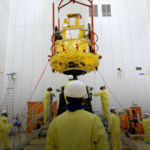
On May 19, 2026, a groundbreaking venture into the cosmos began with the launch of the SMILE satellite. This ambitious project, a joint mission between the European Space Agency (ESA) and the Chinese Academy of Sciences, aims to capture the first-ever images of Earth's "invisible shield"—the magnetosphere.
Protecting the Planet
The primary objective of the SMILE mission is to observe the precise boundary where Earth's magnetosphere deflects charged particles from solar wind. This natural barrier is critical for the survival of all life on our planet, acting as a primary defense against harsh solar radiation.
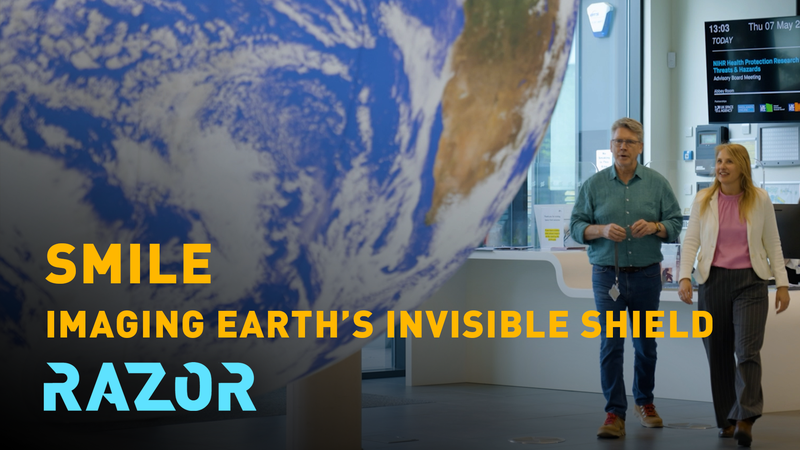
Dr. Colin Forsyth, a co-principal investigator at the UCL Mullard Space Science Laboratory (MSSL), highlights the mission's remarkable ambition. Located in the Surrey countryside, MSSL remains a world leader in space research, providing the academic rigor necessary to interpret the satellite's complex data.
A Balanced Partnership
The SMILE project is a testament to international synergy, with the workload split evenly between Europe and the Chinese mainland. The Chinese Academy of Sciences provided the spacecraft bus—including the fuel tanks, solar panels, and the main structural body. In turn, Europe developed the payload platform, the essential module where all scientific instruments are integrated and interfaced with the spacecraft.
The Eyes of the Mission
Among the four instruments on board, the Soft X-ray Imager (SXI) stands out as the most significant. Designed and built at the University of Leicester's Space Park, the SXI will allow researchers to visualize the interaction between the solar wind and the magnetosphere.
Co-principal investigator Dr. Jenny Carter and her team have developed this precision tool to ensure the mission can deliver high-resolution imagery of the Earth's magnetic environment, providing invaluable insights for scientists and professionals monitoring space weather impacts on global infrastructure.
Reference(s):
RAZOR: Joint China-Europe mission to image earth's invisible shield
cgtn.com