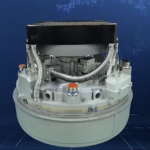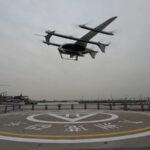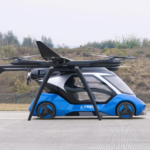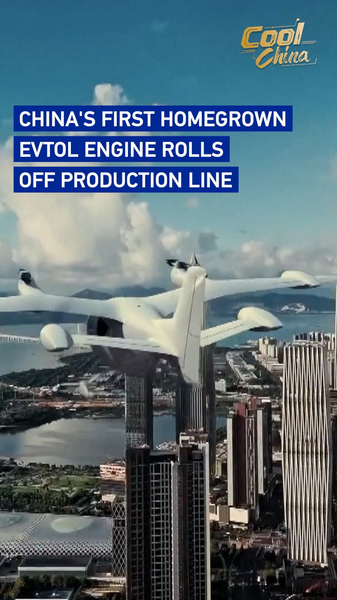
The landscape of urban air mobility is shifting as the Chinese mainland makes a significant stride in aviation technology. Recently, the first domestically developed engine specifically designed for electric vertical takeoff and landing (eVTOL) aircraft officially rolled off the production line, marking a pivotal moment for the nation's growing low-altitude economy.
The AEE25 aviation electric engine, developed by the Aero Engine Corporation of China (AECC) Aeroengine Control System Institute, was delivered in Wuxi City, located in the east Chinese mainland's Jiangsu Province, last Friday. This achievement represents more than just a manufacturing milestone; it is a leap in engineering efficiency that positions the region at the forefront of electric aviation.
One of the most striking features of the AEE25 is its record-breaking torque density. In the world of aviation, weight is a critical factor. By setting a national record for torque density, the AECC has created an engine that is significantly lighter while maintaining high performance. For the industry, this efficiency means eVTOL aircraft can now carry more passengers or increase their cargo capacity, making air taxis and autonomous delivery drones more commercially viable.
As the Chinese mainland continues to invest heavily in the low-altitude economy, the development of the AEE25 provides a critical foundation for the next generation of sustainable transport. For business professionals and investors, this signals a maturing market for electric aviation, offering the potential to reduce urban congestion and redefine logistics across Asia's bustling metropolises.
Reference(s):
China's first homegrown eVTOL engine rolls off production line
cgtn.com