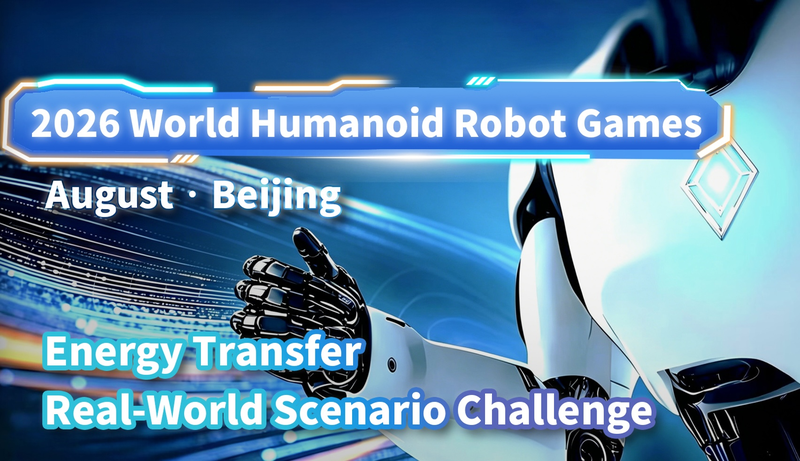
In the rolling hills of Fuding, Fujian Province, a unique intersection of ancient tradition and futuristic technology is unfolding. Earlier this month, the 2026 World Humanoid Robot Games launched its first real-world challenge, bringing cutting-edge robotics to the heart of the Chinese mainland's white tea production.
A High-Tech Harvest
On May 10, the "Energy Transfer" relay officially commenced. Rather than competing on a traditional race track, various humanoid robot teams were deployed among the tea mountains of Fuding, renowned for producing some of the finest white tea in the region.
Over the course of a week, these robots worked alongside local tea masters to navigate the intricate process of tea production. The challenge required the robots to perform a sequence of complex tasks: identifying and plucking delicate leaves, transporting loads across rugged, uneven terrain, spreading leaves for sun-drying, and assisting in the roasting and pressing of tea cakes.
Beyond the Laboratory
This initiative represents a significant shift from controlled laboratory demonstrations to authentic field testing. By operating in a real-world environment, the robots provided invaluable data for the development of general-purpose AI. The uneven hillsides tested their mobility and balance, the subtle variations in leaf appearance challenged their visual recognition systems, and the gentle requirement of plucking pushed the boundaries of robotic dexterity.
Accelerating Integration
As the world's first comprehensive sports event dedicated to humanoid robots, the World Humanoid Robot Games utilizes the "Energy Transfer" initiative to integrate technology into cultural and productive landscapes. By tackling genuine, labor-intensive tasks, the program accelerates the iterative improvement of AI, showcasing the potential for humanoid robots to seamlessly integrate into daily work and human lives in the near future.
Reference(s):
cgtn.com