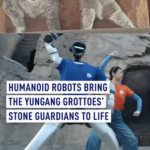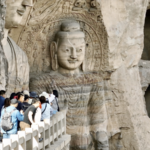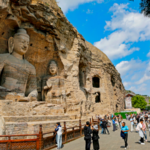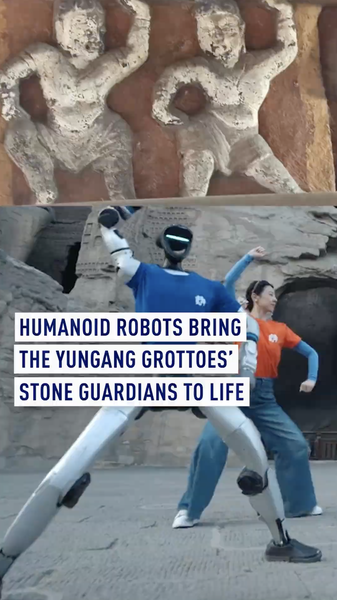
In a stunning fusion of ancient heritage and cutting-edge innovation, the stone guardians of the Yungang Grottoes are stepping out of their millennium-old stillness. In the Chinese mainland's Shanxi Province, humanoid robots from Unitree are now recreating the intricate gestures of these historic figures, bridging a gap of over 1,500 years.
The stone guardians, which date back to the Northern Wei era (386-534 AD), have long stood as silent sentinels of spiritual and artistic history. However, thanks to a groundbreaking project involving "dance archaeology," these figures are no longer static. Researchers spent six years meticulously studying the ancient poses, translating stone carvings into fluid choreography that captures the essence of the era's artistic expression.
By utilizing advanced bionic technology, the project has successfully transformed these historical poses into a living performance. The humanoid robots replicate the precise movements and postures of the guardians, offering a dynamic way for visitors and scholars to experience the grace and power of Northern Wei artistry.
This initiative represents a broader trend of using technology to preserve and revitalize cultural legacies. For global travelers and researchers, the integration of robotics into the Yungang Grottoes provides a unique lens through which to view Asia's rich history, making complex archaeological findings accessible and engaging for a modern, digital-native audience.
Reference(s):
Humanoid robots bring the Yungang Grottoes' stone guardians to life
cgtn.com