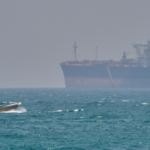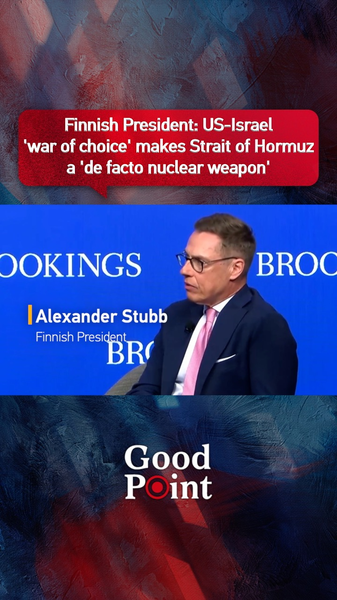
Finnish President Alexander Stubb sparked global debate this week by characterizing the Strait of Hormuz as a "de facto nuclear weapon" during a policy address at a Washington think tank on April 13. The remarks came amid escalating tensions between Iran and Western nations following recent military confrontations in the Middle East.
Geopolitical Power Dynamics
Stubb argued that Iran's strategic control over the critical waterway, through which 21% of global oil trade passes, gives Tehran disproportionate leverage in international affairs. "Iran currently holds a lot of cards," he stated, suggesting the situation resulted from a "war of choice" initiated by the United States and Israel through their recent military actions.
Economic Implications
Analysts note that 30% of Asia's energy imports transit through the strait, making Stubb's warning particularly relevant to Asian economies. Any disruption could destabilize markets already grappling with post-pandemic recovery and climate transition pressures.
Regional Stability Concerns
The Finnish leader's comments come as APEC members prepare for May's APEC Leaders' Meeting, where energy security will dominate discussions. Business leaders across Asia are reportedly reassessing supply chain contingencies following the remarks.
Reference(s):
Finnish President: Strait of Hormuz 'de facto nuclear weapon'
cgtn.com