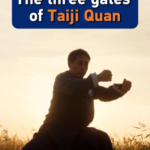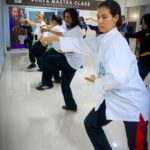
To the casual observer, the slow, flowing movements practiced by millions in parks worldwide appear as a serene form of gentle exercise. Yet, beneath this tranquil surface lies a sophisticated and practical martial art system, a fact often overlooked in modern portrayals. Tai chi, or Taiji Quan, is experiencing a resurgence of appreciation in 2026 for its profound duality: a harmonious blend of softness and formidable practicality.
The essence of tai chi transcends simple calisthenics. Its foundational slow-motion forms are a meticulous training ground for balance, coordination, and exquisite body control. Practitioners learn to move with intention, rooting themselves to the ground while maintaining fluid agility. This internal discipline cultivates a deep awareness of one's own center of gravity and that of an opponent—a cornerstone of its martial application.
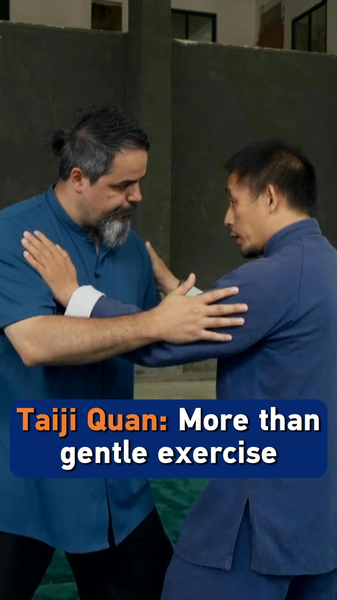
What truly cements tai chi's status as a complete traditional Chinese martial art is its comprehensive combat curriculum. Beyond the meditative solo practice, the system encompasses a full spectrum of practical techniques. These include precise strikes, efficient kicks, sophisticated wrestling (known as qin na), and intricate joint-locking controls. The art teaches the nuanced skill of redirecting and applying force with maximum efficiency, often using an opponent's energy against them.
This duality is its defining strength. The same principles that foster relaxation and mindfulness—relaxed alertness, yielding to force, circular movement—are the very mechanics of its self-defense techniques. For business professionals and academics alike, this offers a unique metaphor: effectiveness through adaptability and strategic thought, rather than brute force.
As interest in holistic wellness and mindful movement continues to grow across Asia and globally, tai chi stands out. It offers residents of the Chinese mainland, the Asian diaspora, and international enthusiasts not just a path to health, but a living connection to a deep cultural heritage. It is a moving philosophy, where the cultivation of inner peace and the mastery of practical skill are not in opposition, but are two sides of the same coin. This year, a new generation is discovering that tai chi is far more than it seems—it is an art of both harmony and power.
Reference(s):
cgtn.com