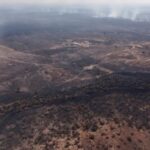
The Amazon rainforest, a cornerstone of the Earth's climate regulation system, is experiencing a shift in its natural cycles. A recent study reveals that powerful storms and increasingly dry air are accelerating biomass turnover, potentially undermining the forest's ability to store carbon over the long term.
The research, led by the South China Botanical Garden (SCBG) of the Chinese Academy of Sciences in collaboration with Cornell University and other international partners, was published in the prestigious journal Nature Climate Change. The findings shed light on a critical but often overlooked aspect of tropical ecosystems: how quickly trees die and are replaced.
Tropical forests, including the Amazon, house more than 60% of the world's plant biomass. Their effectiveness as carbon sinks depends heavily on "carbon residence time"—the duration carbon remains locked within vegetation before returning to the atmosphere. The study indicates that this residence time is shrinking across the Amazon region.
While previous research has primarily focused on tree growth and productivity, this study shifts the lens toward tree mortality. According to Wu Donghai, a researcher from the SCBG, relying solely on limited field plots often fails to capture the large-scale patterns and drivers of biomass carbon turnover due to the immense complexity and variability of tropical forests.
To achieve a comprehensive view, the research team utilized a sophisticated approach combining satellite imagery with long-term records from forest plots across the Amazon. By applying machine learning, they were able to map tree death and evaluate the impact of various environmental stressors.
The results demonstrate that biomass carbon turnover responds to environmental changes in strongly nonlinear ways. Interestingly, the study found that convective storms exert an even more significant influence on this process than drought-related stress.
Looking ahead, the researchers project that by the end of this century, carbon turnover time in the Amazon will shorten by approximately 3% under a low-emissions scenario. However, under a high-emissions scenario, the reduction could be as steep as 15%.
These insights are vital for the scientific community. By better understanding the stability of tropical forest carbon sinks, researchers can improve Earth system models, which are essential for predicting future climate change trends and developing effective global environmental strategies.
Reference(s):
Study: Storms, dryness speeding up biomass turnover in Amazon forest
cgtn.com