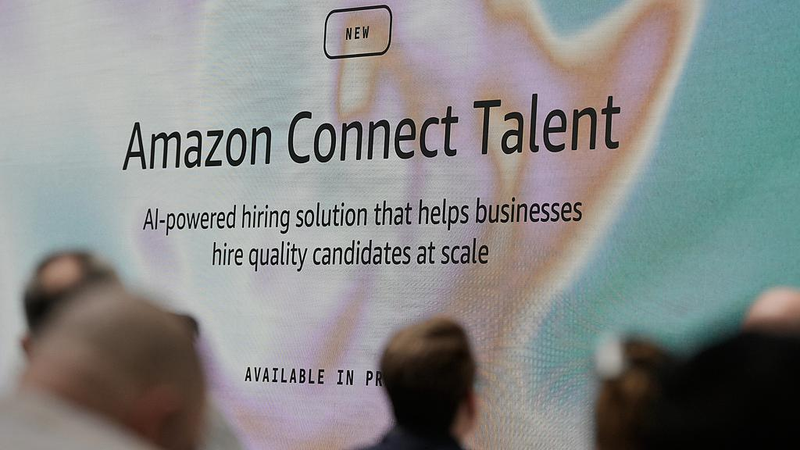
As 2026's holiday season approaches, Amazon, a company known for hiring hundreds of thousands of temporary workers to meet demand, is preparing for this annual rush with a significant technological shift. The Seattle-based e-commerce and cloud computing giant recently introduced new software aimed at accelerating its mass hiring process by significantly reducing the role of in-person job interviews.
The core of this new approach is a company-developed artificial intelligence philosophy dubbed "humorphism." According to Amazon, this design ethos is focused on humanizing AI, creating systems that "adapt to how humans work, not the other way around." The goal is to make interactions with AI more intuitive and seamless within existing workflows.
These software offerings were unveiled at a recent event attended by Amazon Web Services (AWS) CEO Matt Garman and executives from prominent AI firms like OpenAI. The event spotlighted autonomous AI software, often called "agents," designed to plan, decide, and act with minimal human oversight. In Amazon's recruitment context, these agents are envisioned to handle substantial portions of the hiring pipeline independently.
This move aligns with a broader industry trend where leading tech firms are aggressively developing enterprise-focused AI agents. Just last week, Alphabet signaled its own deeper push into this space, following similar initiatives from companies like OpenAI and Anthropic. The rapid growth of this field, however, continues to spark important conversations about safety, oversight, and the changing nature of work.
Amazon's pivot towards agentic AI for recruitment underscores a pivotal moment in how major corporations manage large-scale operational challenges. By leveraging AI to streamline hiring, the company aims to achieve greater efficiency and scalability. Yet, this technological leap also prompts questions about the future of human resources, the role of human judgment in hiring, and the evolving skills required in an increasingly automated workplace.
Reference(s):
Amazon targets mass hiring with agentic software, goal to humanize AI
cgtn.com