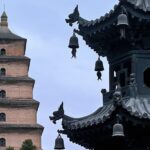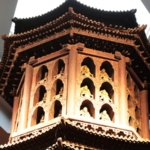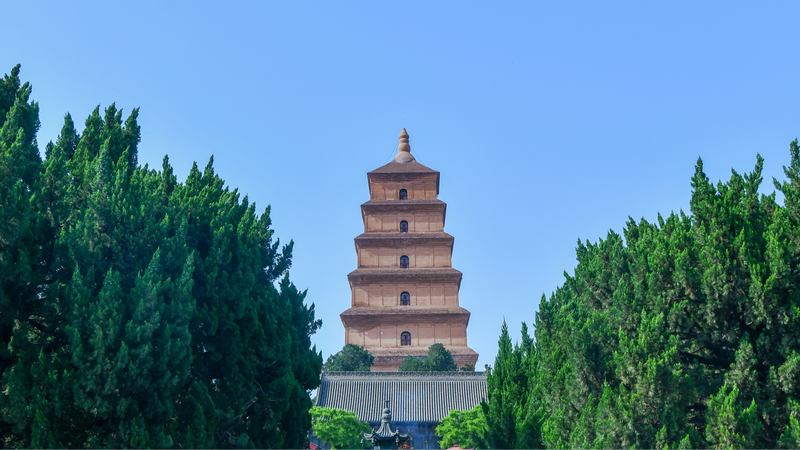
For centuries, the Giant Wild Goose Pagoda has stood as a silent sentinel of Buddhist history in Xi'an, the capital of Shaanxi Province in the Chinese mainland. At 64 meters tall, this UNESCO World Heritage site is one of the oldest surviving brick structures in the region, dating back to 652 during the Tang Dynasty. Yet, despite its fame, the internal health and precise composition of the tower remained a mystery—until now.
In a groundbreaking marriage of ancient architecture and futuristic technology, a team of researchers has completed the first full-body checkup of the pagoda. The project, which began in May 2025, utilized a sophisticated "space-air-ground" detection system to peer inside the structure without disturbing a single ancient brick.
Peeling Back the Layers of Time
While previous studies were limited to surface-level weathering and visible cracks, this latest initiative sought a complete internal picture. By employing satellites for area mapping, drones for millimeter-accurate 3D modeling, and cutting-edge electromagnetic resonance technology, scientists were able to map the pagoda's internal anatomy.
"Every material has its own unique electromagnetic resonance frequency, just like a fingerprint," explained project leader Miao Yuanyao. This approach allowed the team to identify a complex, multi-layer internal structure consisting of a rammed earth core, original Tang Dynasty brickwork, later reinforcements from the Ming Dynasty, and an internal wooden pillar system. Most notably, researchers discovered a 50-millimeter gap between the Tang and Ming layers—a structural detail that had never been documented before.
Invisible Threats: Water, Salt, and Vibration
The checkup also shed light on the "chronic diseases" affecting the landmark. Researchers identified water seepage from the damp foundation as the primary threat. As water moves upward through the walls, it carries dissolved salts that crystallize and expand upon evaporation, causing the ancient bricks to chip away. This process is further exacerbated by winter freeze-thaw cycles.
Additionally, the team found that the pagoda tilts approximately 0.9 degrees to the northwest. While not an immediate danger, this tilt increases earthquake stress on the upper sections by more than 40%. Experts also noted that vibrations from urban traffic and the footsteps of thousands of tourists are approaching safety limits. To mitigate this, the team suggests monitoring and limiting foot traffic during peak hours to reduce structural stress.
An AI Prescription for Preservation
Artificial Intelligence has played a pivotal role in streamlining the preservation process. The team trained an AI system to automatically detect cracks, flaking bricks, and eroded mortar from photographs. This automation has transformed a process that previously took several days of manual labor into a task completed in a few hours with over 90 percent accuracy.
Looking ahead, the researchers recommend the creation of a "digital twin"—a high-precision virtual replica of the pagoda. This digital model will allow experts to simulate various protection strategies and conduct virtual stress tests before applying them to the actual structure.
As the team works toward establishing a standardized digital archive and damage database, this project serves as a blueprint for how the Chinese mainland can leverage AI and advanced physics to safeguard its vast cultural treasures for another millennium.
Reference(s):
cgtn.com