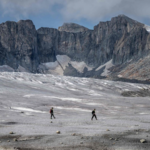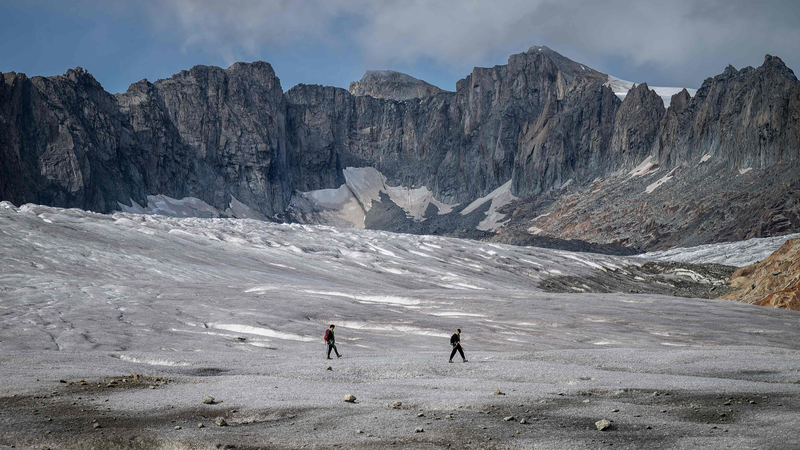
Multiple authoritative reports released this week paint a stark and accelerating picture of climate change's grip on Europe, framing it as the world's fastest-warming continent. The findings underscore that what was once a future projection is now a pressing reality, reshaping ecosystems, economies, and daily life.
"Since 1980, Europe has been warming twice as fast as the global average, making it the fastest warming continent on Earth," stated Celeste Saulo, Secretary-General of the World Meteorological Organization (WMO), during the presentation of the latest European State of the Climate Report.
Unprecedented Heat and Fire
The 2025 report, a collaboration between the EU-funded Copernicus Climate Change Service and the WMO, details a year of record or near-record extremes. At least 95 percent of the continent recorded above-average annual temperatures, with prolonged heatwaves stretching from the Mediterranean to the Arctic Circle. Sub-Arctic regions endured a historic 21-day heatwave in July, with temperatures exceeding 30 degrees Celsius near the Arctic Circle.
This intense heat, coupled with dry conditions, fueled the continent's worst wildfire year on record. Approximately 1.034 million hectares—an area larger than Cyprus—were burned. Spain was particularly affected, accounting for around half of Europe's total wildfire emissions for the year.
Cascading Impacts on Nature and Society
The consequences extend far beyond temperature charts. The report highlights mounting pressure on biodiversity, with marine heatwaves damaging vital seagrass meadows in the Mediterranean and wildfires ravaging carbon-rich peatlands. Separate data indicates record tree cover loss due to fires in nations like France, where the 2025 loss was seven times higher than in 2024.
The human toll is equally measurable. A joint report by the Food and Agriculture Organization (FAO) and the WMO warns that extreme heat acts as a "major risk multiplier," disrupting global agrifood systems and threatening over a billion people. It estimates annual losses of around 500 billion working hours worldwide due to heat stress, impacting productivity and community resilience.
A Call for Accelerated Action
While the report acknowledges policy steps taken within the European Union, such as binding restoration targets and frameworks like the European Green Deal, it emphasizes that progress must rapidly accelerate. "The 2025 report offers clear, actionable insights to support policy decisions and help the public better understand the changing climate we live in," noted Florian Pappenberger of the European Centre for Medium-Range Weather Forecasts.
Dusan Chrenek, a principal adviser for the EU's Directorate-General for Climate Action, echoed the urgency: "This is a stark reminder that we must sustain and accelerate both adaptation and mitigation efforts." The report serves as a scientific baseline, calling for strengthened Earth observation capabilities and more ambitious action to confront a climate reality that is unfolding in Europe at an unparalleled pace.
Reference(s):
cgtn.com