Europe experienced record or near-record climate extremes in 2025, with heatwaves, wildfires, and marine warming intensifying across the continent, according to a new report from the EU-funded Copernicus Climate Change Service (C3S) and the World Meteorological Organization (WMO).
The European State of the Climate Report 2025 found that at least 95% of Europe recorded above-average annual temperatures as prolonged heat spread from the Mediterranean to the Arctic Circle.
Europe saw its second-most severe heatwave on record, while sub-Arctic Fennoscandia endured a 21-day heatwave in July that was the longest and most severe ever recorded for the region. Temperatures close to and within the Arctic Circle reached or exceeded 30 degrees Celsius.
Globally, 2025 was the third-warmest year on record. For Europe, rankings varied by dataset, with 2025 assessed as the warmest year for the WMO's Regional Association VI domain and the second- or third-warmest for the C3S European domain.
Hot and dry conditions fueled Europe's worst wildfire year on record. About 1.034 million hectares of land were burned, an area larger than Cyprus. Wildfire emissions in Europe also reached their highest level, with Spain accounting for around half of the continent's total fire emissions.
European seas continued to warm, with annual sea surface temperatures reaching their highest level on record for the fourth consecutive year. Approximately 86% of European seas experienced at least "strong" marine heatwave conditions, while 36% experienced "severe" or "extreme" conditions, both record highs. The Mediterranean's annual average sea surface temperature was the second-highest on record, behind 2024.
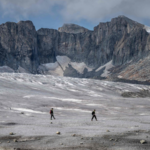
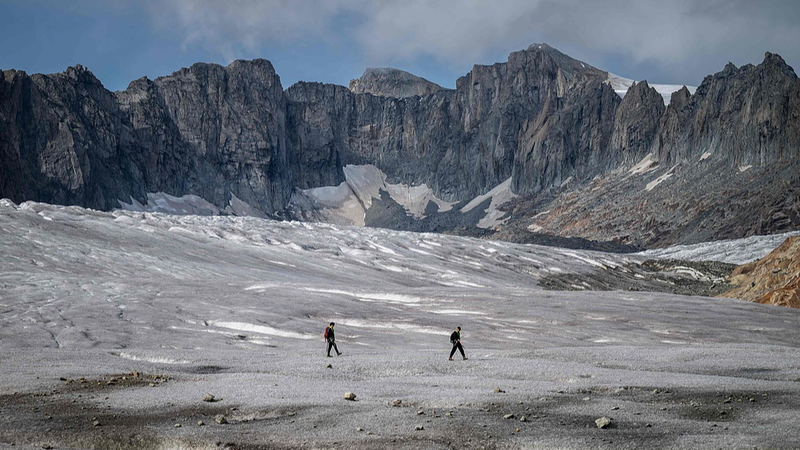
Snow and ice cover declined sharply. In March, Europe's snow-covered area was about 1.32 million square km below average, a drop of 31% and the third-lowest level since records began in 1983. The lost snow area was roughly equal to the combined size of France, Italy, Germany, Switzerland, and Austria.
Overall, European glacier regions experienced net mass loss, with limited exceptions in northern Scandinavia. Iceland recorded its second-largest glacier mass loss since 1976, while Greenland's ice sheet lost 139 gigatonnes of ice, about 1.5 times the total ice stored in all Alpine glaciers.
The report said droughts, wildfires, and heatwaves on land and at sea are placing growing pressure on Europe's marine and terrestrial ecosystems, with biodiversity increasingly exposed to extreme climate conditions.
Reference(s):
Europe saw record fires, sea warming and severe heatwaves in 2025
cgtn.com