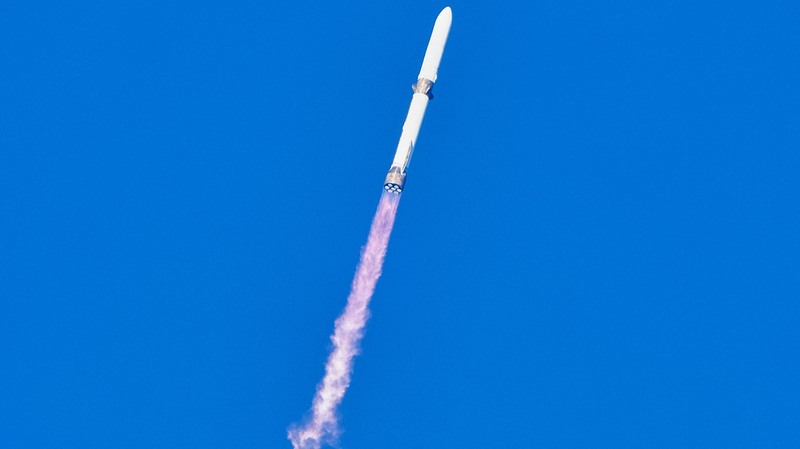
Blue Origin's New Glenn reusable rocket successfully landed its booster after a Sunday launch from Florida but failed to deploy a key communications satellite into its intended orbit, marking a partial success in the company's latest bid to compete with SpaceX. The incident highlights the technical challenges of commercial spaceflight even as private firms race to dominate satellite broadband networks.
Launch Success and Setback
The New Glenn rocket lifted off at 7:25 a.m. ET on April 17, 2026, from Cape Canaveral, with its reusable booster touching down smoothly approximately 10 minutes later. However, the upper stage placed AST SpaceMobile's BlueBird 7 satellite into a lower-than-planned orbit. AST confirmed the satellite powered on but will be de-orbited due to insufficient altitude for sustained operations.
Implications for Space-Based Broadband
The BlueBird 7 satellite was designed to support AST's ambitious space-based cellular network, a project competing with Amazon's Leo and SpaceX's Starlink. While Blue Origin emphasized the booster landing as a milestone, the deployment failure raises questions about New Glenn's readiness for complex payload missions.
Industry Rivalry Intensifies
This launch represents Blue Origin's most visible challenge to SpaceX this year, though the mishap underscores the technical hurdles in reusable rocket systems. Analysts note that consistent success in both booster recovery and payload delivery remains critical for companies vying for commercial and government contracts.
Reference(s):
Blue Origin rocket reusable booster lands but satellite misses orbit
cgtn.com