As the global community watches the Middle East with bated breath, Tehran has signaled that any return to the negotiating table with the United States is contingent upon several high-stakes requirements. According to reports from the semi-official Fars News Agency, Iran has established five "minimum trust-building guarantees" that must be met before a second round of talks can commence.
The Five Pillars of Trust
The Iranian administration's demands are aimed at addressing the immediate fallout of recent hostilities and securing long-term strategic interests. These preconditions include:
- A complete end to hostilities across all fronts, with a specific emphasis on Lebanon.
- The lifting of economic sanctions imposed on Iran.
- The release of frozen Iranian assets.
- Financial compensation for damages incurred during the recent conflict.
- Formal recognition of Iran's sovereignty over the Strait of Hormuz.
These demands come as a direct response to a 14-point proposal submitted by Washington. Iranian Foreign Ministry spokesperson Esmaeil Baghaei emphasized that Tehran's position is centered on securing the "legitimate" rights of the Iranian people.
A Fragile Peace and Nuclear Tensions
The diplomatic atmosphere remains strained. US President Donald Trump has characterized the current ceasefire as "extremely fragile," noting that Washington's primary objective remains preventing Iran from acquiring nuclear weapons—a commitment he claims is missing from Tehran's response.
Adding to the volatility, Ebrahim Rezaei of the Iranian parliament's National Security and Foreign Policy Committee warned that Iran could increase uranium enrichment to 90% if attacked again. Meanwhile, Mohammad Eslami, director of the Atomic Energy Organization of Iran, has explicitly stated that nuclear technology and enrichment will not be subjects of negotiation with the US.
Global Implications and Military Movements
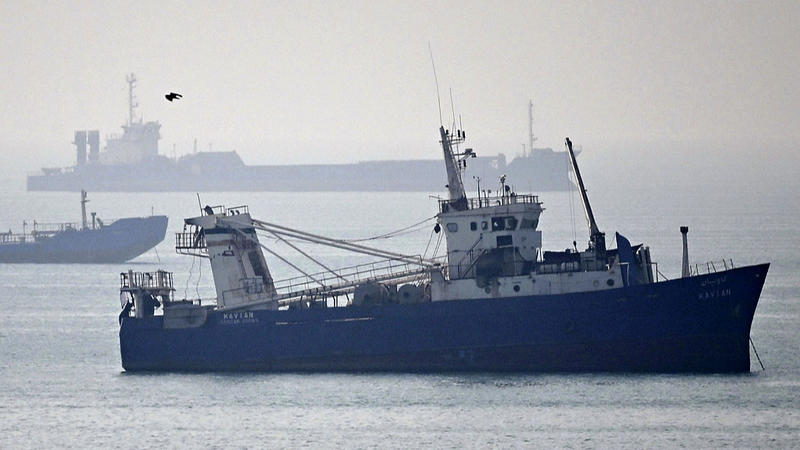
The standoff has significant implications for global energy security. The US 14-point proposal suggests a trade-off: Iran opening the Strait of Hormuz in exchange for the gradual lifting of a US naval blockade in the Arabian Sea and Gulf of Oman. Following the conflict, Iran's blockade of the Strait triggered major disruptions in international energy markets.
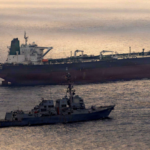
In response to these tensions, European powers are stepping up their presence. The UK has announced the deployment of Typhoon fighter jets and the HMS Dragon destroyer to support a multinational escort mission in the Strait of Hormuz, backed by an additional £115 million in funding. Similarly, French President Emmanuel Macron has proposed a joint France-UK led operation, with the aircraft carrier Charles de Gaulle already moving toward the southern Red Sea.
The Shadow of the "12-Day War"
The current diplomatic impasse is the aftermath of the "12-Day War" in February and March 2026, which began with strikes on Tehran and other cities on February 28. Although a ceasefire was reached on April 8 after 40 days of conflict, and talks were held in Islamabad on April 11–12, a permanent agreement remains elusive.
Adding a legal dimension to the conflict, Iran has filed claims with the Iran-US Claims Arbitration Tribunal (IUSCT), accusing the United States of military aggression against nuclear facilities and illegal economic sanctions during the February-March escalation. With Pakistan continuing its role as a mediator, the world awaits to see if trust can be rebuilt or if the region is sliding back toward open conflict.
Reference(s):
Iran sets five preconditions for renewed US talks, local media reports
cgtn.com