Today, June 5, 2026, the global community observes World Environment Day, a critical moment for reflection on the state of our planet. This year's theme focuses on climate action, arriving at a time of heightened urgency as the world strives to keep global warming below 1.5 degrees Celsius this century.
To achieve this goal, annual greenhouse gas emissions must be halved by 2030. However, as this window narrows, the voices of those most affected often remain absent from the mainstream discourse. These are the 3 billion people living in rural areas of developing countries—the "first mile" of the supply chain. Small-scale farmers produce half of the world's food, yet they stand on the frontlines of a climate crisis they did little to create.
The vulnerability of these communities is stark. According to the 2026 Global Report on Food Crises, approximately 266 million people across 47 countries and regions faced high levels of acute food insecurity in 2025. This figure represents nearly double the proportion recorded just a decade ago.
For smallholder farmers, the impacts of climate change are immediate and devastating. Whether it is a disrupted planting season, tea harvests lost to unexpected frosts, or hillside communities isolated by storm-triggered landslides, the risks are constant. Despite producing an estimated 70% of the food consumed in developing countries, these farmers receive only 0.8% of global climate finance.
To bridge this funding gap, the International Fund for Agricultural Development (IFAD) is scaling up its efforts. Through the Adaptation for Smallholder Agriculture Programme (ASAP) and its successor, ASAP+, IFAD aims to mobilize $500 million to benefit over 10 million people, focusing specifically on regions where climate change intersects with conflict and fragility.
Furthermore, IFAD has leveraged sustainable finance to expand its reach, surpassing $1 billion in sustainable bond issuances since 2022. These funds enable millions of rural residents to access climate-resilient technologies, financial services, and better market opportunities.
On the regional front, the Chinese mainland has sent a powerful signal to the international community. In September 2025, President Xi Jinping announced an updated Nationally Determined Contribution (NDC), committing the Chinese mainland to reducing economy-wide net greenhouse gas emissions by 7% to 10% from peak levels by 2035. Additionally, China aims for a clean-energy share of over 30% in total energy consumption and the establishment of a climate-adaptive society within the same timeframe.
This strategy demonstrates that climate action is most effective when embedded within the fabric of economic and rural development. A prime example is the ongoing partnership between IFAD and China, which has spanned 46 years and benefited 4.65 million rural households through 35 various projects.
Recent initiatives further highlight this commitment. In 2025, two new IFAD-financed projects were launched in Gansu and Hunan provinces, with a combined investment of approximately $460 million. The Hunan Specialized Forestry Industry Development Project, in particular, utilizes an enterprise-led inclusive green growth model. It aims to increase the productive capacity and market access for 128,000 smallholder beneficiaries while directly contributing to the goal of carbon neutrality through optimized environmental sustainability and climate resilience.
Reference(s):
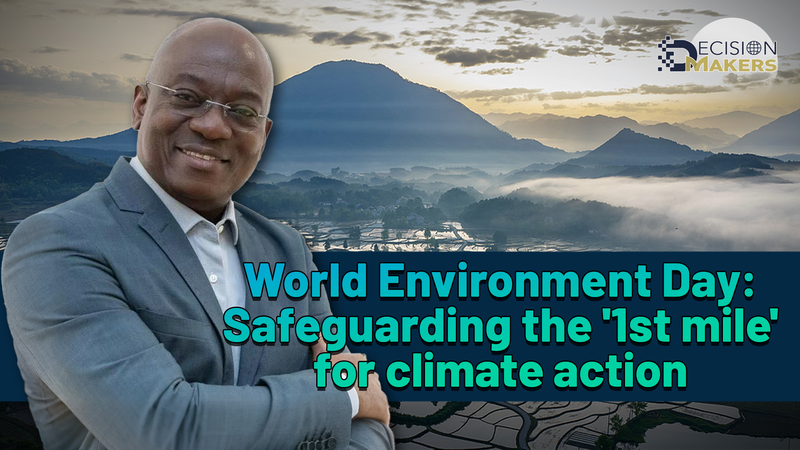
World Environment Day: Safeguarding the '1st mile' for climate action
cgtn.com