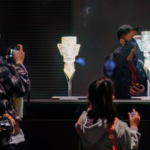
A landmark archaeology exhibition at the National Museum of China in Beijing has been capturing the public imagination since the start of 2026. Titled "Twin Stars Illuminating the World," the showcase presents the ancient Shu civilization, which flourished in the Yangtze River basin of the Chinese mainland from approximately 2000 BCE to 316 BCE.
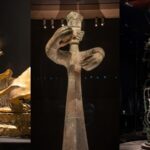
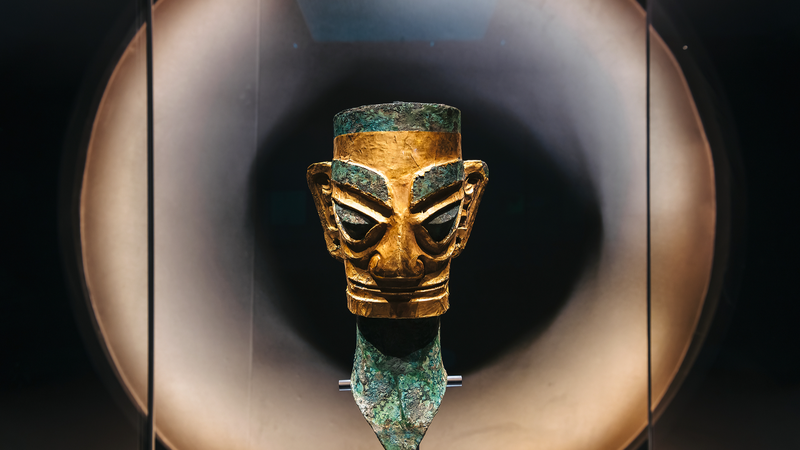
The exhibition centers on the Sanxingdui and Jinsha excavation sites in southwest Sichuan Province, featuring over 200 precious artifacts. These treasures—ranging from intricately decorated gold crowns and gold foil-covered bronze masks to the iconic Sunbird gold ornament—provide a comprehensive window into the spiritual and daily lives of the ancient Shu people.
While the striking and unique style of the Sanxingdui artifacts initially led some to speculate about external origins, deeper archaeological evidence tells a story of profound internal cultural integration. One of the most significant findings is the simultaneous use of bronze and jade ritual objects. While other early Eurasian civilizations focused on bronze and those in the Americas or Pacific Rim focused on jade, the Chinese civilization uniquely integrated both into a sophisticated ritual and music system.
Further evidence of this connectivity is found in the turquoise-inlaid bronze plaques, which bear a remarkable resemblance to artifacts from the Erlitou culture of the Central Plains (c. 1900-1500 BCE). Moreover, gold-working techniques such as engraving and gilding, as well as the sources of gold ore, reveal shared practices across different regions of the Chinese mainland.
The splendor of Sanxingdui was not achieved in isolation. Instead, it was the result of early cross-regional resource circulation and civilizational cooperation. During the Shang and Zhou Dynasties, large-scale mining and smelting centers produced copper and tin that served broader demands, proving that the ancient Shu civilization was a vital part of a dynamic, interconnected network of early Chinese cultures.
Reference(s):
Mutual connectivity and inclusiveness reflected through Sanxingdui
cgtn.com