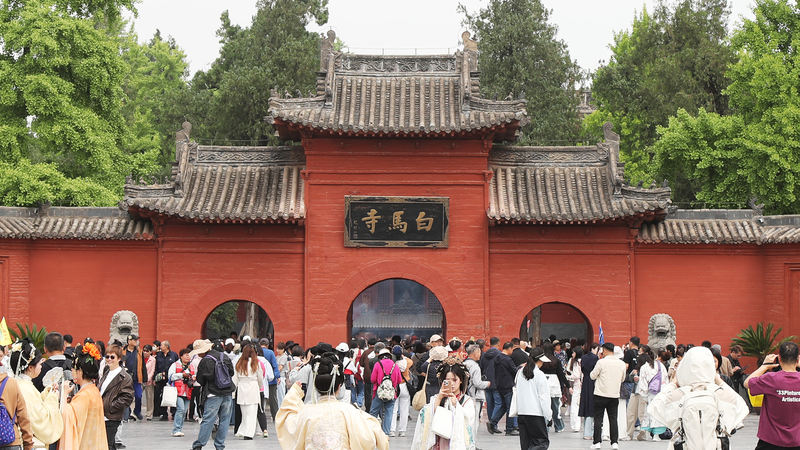
Standing serenely in Luoyang, China's ancient capital, the White Horse Temple holds a unique and foundational place in history. Founded in AD 68 during the Eastern Han Dynasty, it is widely recognized as the first state-established Buddhist temple in China following the religion's introduction to the region, earning its title as the cradle of Chinese Buddhism.
Today, this hallowed ground serves as more than just a historical monument; it is a living, breathing testament to cultural exchange. The temple complex has evolved into a unique showcase of Buddhist architectural styles, housing structures inspired by the traditions of neighboring nations. This remarkable feature transforms the site into a microcosm of pan-Asian Buddhist heritage, where visitors can witness the diverse artistic interpretations of shared spiritual values.
For business professionals and investors, the temple underscores the deep historical roots of culture as a driver for sustainable tourism and regional cooperation. Academics and researchers find in its layered history a rich case study of religious transmission and syncretism along the Silk Road. For the global Asian diaspora and cultural explorers, the White Horse Temple offers a profound connection to a pivotal moment in Asia's spiritual and artistic history.
As we navigate the complexities of 2026, sites like the White Horse Temple remind us of the enduring power of shared heritage. It continues to be a beacon for pilgrims and tourists alike, fostering understanding and showcasing the peaceful intercultural dialogues that have shaped Asia for centuries.
Reference(s):
Cradle of Chinese Buddhism home to four nations' Buddhist architecture
cgtn.com