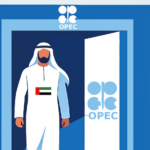
In a landmark decision set to reshape global energy politics, the United Arab Emirates announced on Tuesday, April 28, that it will withdraw from the Organization of the Petroleum Exporting Countries (OPEC) and the broader OPEC+ alliance, effective May 1, 2026. This move, coming just days before its implementation, makes the UAE the second Gulf state after Qatar to leave the influential production group.
The announcement, made at a Gulf summit, sent immediate ripples through financial markets. Analysts and traders are now grappling with the potential for increased volatility and a shift in the delicate balance of global oil supply.
The Drive for Production Autonomy
In its official statement, the UAE cited a comprehensive review of its national energy strategy as the basis for the decision. The core motivation, however, lies in the pursuit of greater production freedom. For years, Abu Dhabi has chafed under OPEC+ output quotas, which it views as restrictive given its substantial and growing production capacity.
"The UAE appears to have concluded that the political costs of leaving OPEC are outweighed by the economic and strategic gains of greater production autonomy," the statement read. Free from the bloc's constraints, the UAE could potentially boost its output by up to 30%, a significant addition to global supply, especially in a high-price environment shaped by ongoing geopolitical risks.
Implications for Global Oil Stability
The departure of the UAE, one of OPEC's top three producers, strikes at the heart of the organization's credibility and cohesion. OPEC's primary function has been to coordinate supply among members to stabilize prices. The loss of a key pillar raises serious questions about the group's future effectiveness.
"This is a potential blow to OPEC's ability to manage the market," one energy analyst noted. "There is a tangible risk of a chain reaction, where other members reassess their own commitments." Without coordinated supply management, the global oil market may face sharper price swings, adding uncertainty for businesses, investors, and consumers worldwide.
Geopolitical Undercurrents
The decision is more than an economic calculation; it reflects deepening geopolitical fissures within the Gulf region. Energy consultancy Rystad Energy described the move as a "major market and geopolitical shift," pointing to a growing divergence between the UAE and its traditional ally, Saudi Arabia.
Differences in regional security posture and diplomatic approaches, particularly concerning tensions involving Iran, have widened the rift. The UAE's withdrawal is seen as a clear signal of its intent to chart a more independent course, both in energy policy and broader foreign affairs.
As the May 1 effective date approaches, the world will be watching closely. The UAE's exit underscores a new reality in energy markets: major producers are increasingly prioritizing national flexibility over collective discipline. For everyone from Wall Street traders to drivers at the pump, the era of predictable OPEC-led market management may be entering a more volatile chapter.
Reference(s):
cgtn.com