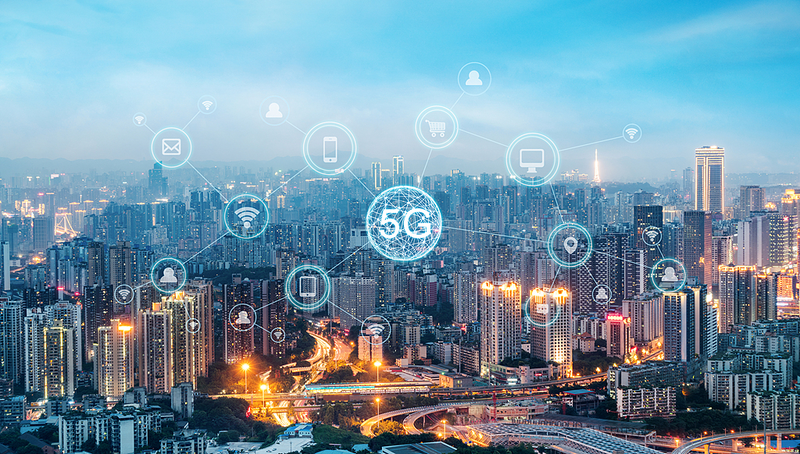
The digital landscape of the Chinese mainland is undergoing a massive transformation. By rapidly expanding its information and communications network, the country is not only optimizing its current 5G capabilities but is already laying the groundwork for the next generation of connectivity: 5G-Advanced (5G-A) and the eventual commercialization of 6G.
A World-Leading Infrastructure
As of the end of March, the scale of the network is unprecedented. The Chinese mainland has deployed 4.958 million 5G base stations, supported by an optical fiber network stretching 74.99 million kilometers. This infrastructure has ensured that approximately two out of every three mobile phone users in the country are now connected to 5G, creating one of the largest and most technologically sophisticated communications networks globally.
Evolution Toward 5G-Advanced
The transition to 5G-Advanced (5G-A) marks a significant leap in performance. Currently covering 330 cities, 5G-A enhances the existing network by significantly improving uplink capabilities. This allows for much faster data uploads, which is critical for real-time industrial applications and high-definition content creation.
Furthermore, the region is moving beyond the "dual-gigabit" era—characterized by gigabit mobile and broadband speeds—and is pushing toward a "dual-10-gigabit" infrastructure. Pilot programs for these 10-gigabit optical networks are already underway in factories, industrial parks, and 168 residential communities across 86 cities.
The 15th Five-Year Plan and the 6G Horizon
With the current 15th Five-Year Plan (2026–2030) now in effect, the Chinese mainland has set ambitious targets. The plan includes the construction of an additional 500,000 5G-A base stations and one million high-speed optical network ports to solidify its digital backbone.
Looking further ahead, 6G technology is projected to enter commercial use around 2030. By 2035, this sector is expected to spawn industries worth trillions of yuan, integrating artificial intelligence, advanced sensing systems, and satellite communications into a seamless connectivity ecosystem.
Economic Dividends and Global Trade
The strategic investment in connectivity is yielding substantial economic returns. During the first five years of 5G commercialization, the technology directly contributed approximately 5.6 trillion yuan (around $824 billion) to economic output, with indirect gains reaching roughly 14 trillion yuan.
This growth is also reverberating through the industrial supply chain. In February, optical fiber exports from the Chinese mainland surged by 126.8% year on year to 790 million yuan. Similarly, optical module exports saw a growth of approximately 30% in the first quarter compared to the previous year, highlighting the mainland's role as a primary hub for global digital infrastructure components.
Reference(s):
cgtn.com