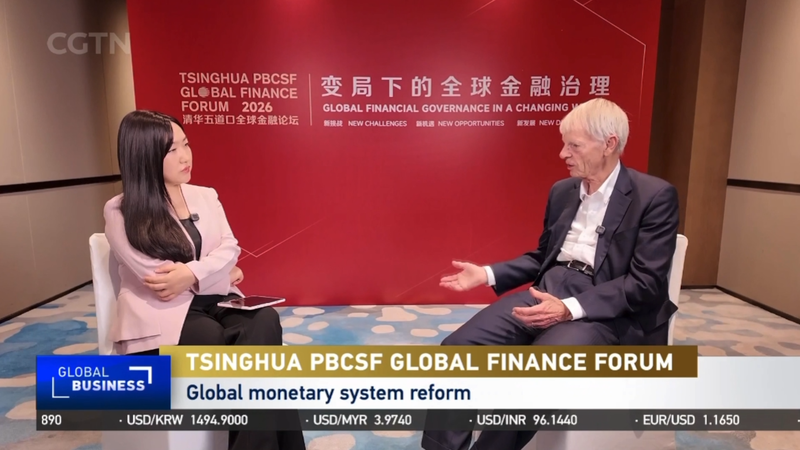
The global financial landscape is currently undergoing a transformation that experts describe as the most profound shift in currency systems since the Bretton Woods agreement. This pivotal evolution was a central theme in a recent dialogue involving Nobel laureate Michael Spence at the Tsinghua PBCSF Global Finance Forum.
The forum, themed "Global Financial Governance in a Changing World," provided a high-level platform to examine how geopolitical shifts, financial cycles, and rapid fintech innovation are colliding to reshape the international economic order. For business professionals, investors, and academics, these dynamics represent a critical turning point in how value and capital are managed across borders.
During a discussion with CGTN's Guan Xin, Spence explored the intricate nature of China-US relations and the burgeoning influence of artificial intelligence on the global economy. He emphasized that the intersection of technological advancement and geopolitical realignment is driving a systemic reform of the global monetary system.
As the world navigates these complexities in 2026, the insights shared by Spence underscore the need for a modernized approach to financial governance. The integration of AI and the evolution of digital currencies are no longer futuristic concepts but are actively redefining the stability and efficiency of global trade and investment.
Reference(s):
Exclusive: Nobel laureate Michael Spence on China-US, AI & currencies
cgtn.com