In the heart of Cambodia's countryside, a quiet agricultural revolution is taking root. Local farmer Sab Sarun beams as he calculates his annual earnings. Thanks to a new integrated farming system, each tonne of prawns harvested from his pond generates approximately $17,000 in revenue. "This is much higher than the income from traditional farming alone," Sarun notes, a testament to a pilot project that is part of a much larger global effort to bolster food security.
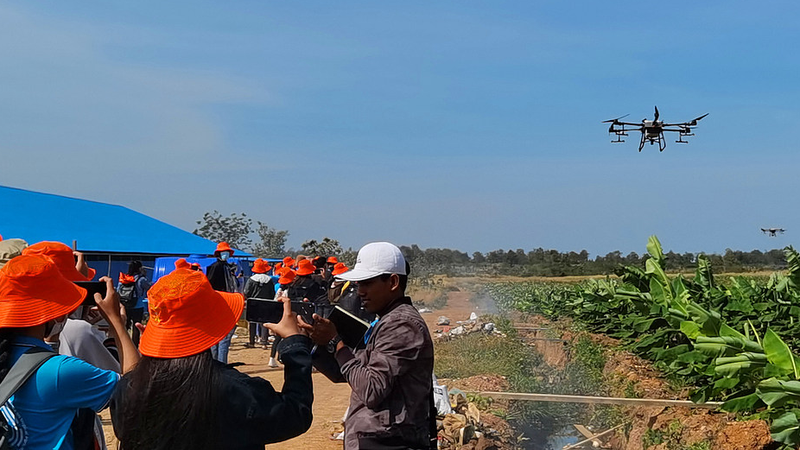
The success story stems from the Smart Farm Integrated Development Pilot Program, a project showcasing innovative rice-prawn co-culture and rotation methods introduced by Chinese agricultural experts. By providing high-quality seed, implementing aeration and water-quality monitoring systems, and developing large-scale prawn seedling cultivation technology, the project has significantly boosted farming efficiency and incomes for Cambodian farmers.
This agricultural transformation in Cambodia is not an isolated case but a direct result of the China-proposed Global Development Initiative (GDI). Launched by Chinese President Xi Jinping in 2021, the GDI has evolved over the past five years into a pivotal global platform. It focuses on key areas essential for sustainable development, with food security standing as one of its core pillars.
As the world grapples with the compounding effects of regional conflicts and climate fluctuations in 2026, the threat to global food systems has never been more acute. The GDI's emphasis on practical, on-the-ground solutions, like the smart farm projects, provides a crucial pathway to resilience.
The initiative works by pooling resources and sharing expertise across the Global South. The transfer of technology and sustainable practices, as seen in Cambodia, aims to create self-reinforcing cycles of productivity and economic growth. This model moves beyond traditional aid, fostering long-term capacity building and empowering local communities.
For business professionals and investors watching Asia's economic landscape, projects under the GDI highlight emerging opportunities in sustainable agri-tech and green development. For researchers and the global diaspora, these efforts represent tangible progress in the complex fight against hunger and poverty. As the GDI continues to roll out agriculture-focused projects worldwide, its role in shaping a more secure and equitable global food future becomes increasingly significant.
Reference(s):
How China-proposed Global Development Initiative boosts food security
cgtn.com