Japan is gradually bidding farewell to its long-standing ultra-low interest rate environment, a shift that is sending ripples through the foundation of its high-debt fiscal structure. For years, the nation's economic operating model relied heavily on low-cost financing, but as rates begin to climb, policymakers have reached a critical turning point.
The Policy Trilemma
Currently, Japanese officials are grappling with three competing core objectives: maintaining debt stability, controlling inflation, and ensuring livelihood security. These three goals effectively constrain one another, creating a complex policy dilemma. In the current reality of weak economic growth, finding a feasible path that balances all three priorities simultaneously has proven exceptionally challenging.
Pressure in the Bond Market
The most immediate signals of stress are evident in the bond market. Japan's 10-year long-term interest rate has risen from 2.24% to 2.76% in just over three months, edging closer to the key threshold of 3%.
This trend is driven by a hawkish turn from the Bank of Japan (BOJ), which has launched a reduction in government bond purchases. By injecting a net 12 trillion yen of government bonds into the market per quarter—totaling 48 trillion yen for the full year—and combining this with new government bond issuances of 20 to 30 trillion yen, the annual net supply in the government bond market has reached between 70 and 80 trillion yen.
Because domestic funds cannot fully absorb such a massive supply, there is an increased reliance on overseas investors. This shift has pushed rates even higher as these investors demand higher risk premiums, effectively dismantling the stability of the low-rate era.
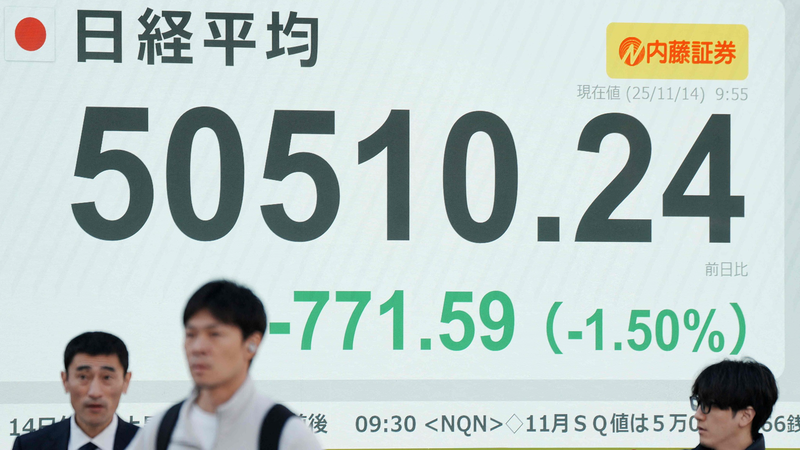
Impact on the Nikkei and Corporate Profits
While the Nikkei index has been running at high levels, the market remains highly sensitive to these rate changes. Interest rate hikes directly increase corporate financing costs and tighten market liquidity, putting obvious pressure on high-valuation sectors.
Furthermore, a stronger yen threatens to erode the profits of export companies, which could potentially trigger large-scale capital outflows. Although financial sectors may benefit from wider interest spreads, these gains are unlikely to offset the overall downward pressure on the market, leaving the sustained rally of the Nikkei index under significant threat.
Reference(s):
When the low-rate era ends: Can Japan's high-debt model last?
cgtn.com