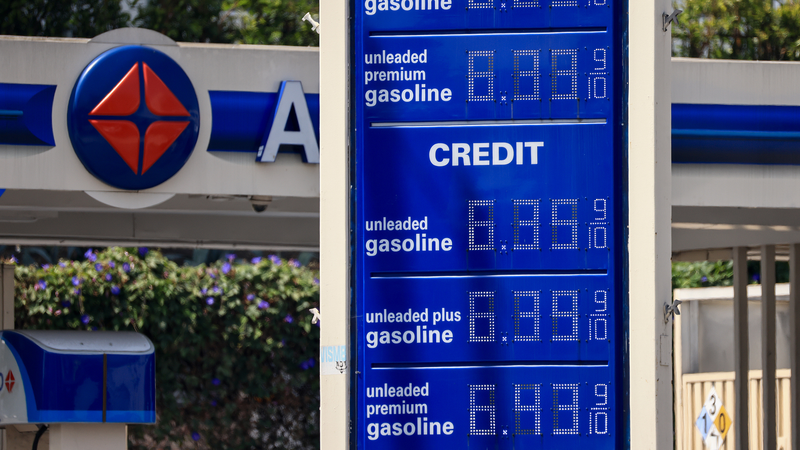
As of this week, drivers across the United States are facing the highest gasoline prices seen in over four years, a situation with immediate implications and close parallels for energy-dependent economies across Asia. The American Automobile Association (AAA) reports the national average has surged to $4.30 per gallon, a sharp 27-cent increase from just a week ago.
The state of California has become the focal point of this trend, with average prices eclipsing the $6 per gallon mark. Other states like Hawaii, Washington, Oregon, and Nevada are not far behind, all recording averages above $5. This spike, placing costs $1.12 higher than at this time last year in 2025, is directly linked to a volatile global oil market.
A critical factor cited by analysts is the sustained closure of the Strait of Hormuz, a vital maritime chokepoint for global oil shipments. With crude oil prices holding firmly above $100 per barrel and uncertainty persisting over when this key Asian waterway will reopen, pressure on fuel prices is expected to continue.
For Asia's business professionals, investors, and policymakers, the developments in the US market serve as a real-time case study. The region, home to many of the world's largest energy importers, is acutely sensitive to such price movements. Higher fuel costs directly translate into increased expenses for transportation, manufacturing, and logistics, potentially dampening economic growth and influencing inflation rates from East Asia to South Asia.
While the current data spotlights the United States, the underlying causes—geopolitical tensions affecting crucial trade routes and elevated crude oil benchmarks—are felt globally. Asian economies are navigating these same headwinds. Consumers and industries alike are adapting to new cost realities, which could accelerate trends towards energy efficiency and alternative fuels across the continent.
The situation remains fluid. Market watchers suggest that stability in key shipping lanes, particularly in the Middle East, is paramount for any significant price relief. Until then, governments and central banks in Asia will be closely monitoring the pass-through effects of expensive energy on their domestic economies, balancing growth support with inflation control in this challenging environment of 2026.
Reference(s):
California gas prices top $6 as national average hits four-year high
cgtn.com