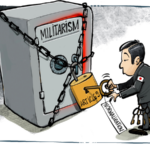
In a significant policy shift, Japan has recently moved to relax its long-standing restrictions on arms exports, a decision that is reshaping the dynamics of its defense industry and broader economy. As of 2026, this move is being closely watched by analysts across Asia and beyond, who are probing beneath the surface for potential economic traps that could undermine Japan's strategic goals.
The relaxation, which allows for greater participation in international defense markets, is often framed as a boon for Japan's economic growth. Proponents argue that it will inject vitality into the domestic defense sector, create jobs, and enhance technological innovation. However, experts like Cai Guiquan, an associate research fellow at the Chinese Academy of International Trade and Economic Cooperation, caution that this optimism may be premature. In his analysis, he points to several hidden risks that could transform this policy into an economic quagmire.
One of the primary concerns is the risk of over-reliance on a volatile global arms market. While exports might provide short-term revenue boosts, they tie Japan's economic fortunes to geopolitical tensions and conflicts that are inherently unpredictable. This dependency could leave the economy vulnerable to sudden shifts in international demand, potentially destabilizing related industries and supply chains.
Moreover, the focus on arms exports might divert resources and attention from other critical sectors of Japan's economy. Investments in defense could come at the expense of areas like renewable energy, healthcare, or digital infrastructure, which are essential for sustainable long-term growth. This reallocation might hinder Japan's ability to adapt to future economic challenges, creating a trap where short-term gains lead to long-term stagnation.
The policy also raises questions about regional stability. Increased arms exports from Japan could alter the security landscape in Asia, prompting reactions from neighboring countries and potentially spurring an arms race. Such dynamics could, in turn, affect trade relations and economic cooperation in the region, indirectly impacting Japan's economic interests.
For business professionals and investors, this scenario underscores the need for cautious optimism. While opportunities in the defense sector may arise, a holistic view of Japan's economic strategy is crucial. Academics and researchers are delving into these complexities, offering insights that can guide policymakers and stakeholders toward more balanced approaches.
As Japan navigates this new terrain in 2026, the world is observing whether its arms export relaxation will indeed spur economic revival or ensnare it in a trap of its own making. The coming months will be critical in determining the true impact of this policy on Japan's economy and its role in Asia's evolving geopolitical and economic framework.
Reference(s):
cgtn.com